About this service
Tangled or matted areas may require additional attention depending on your pet's coat condition. Mufasa works patiently through tangles where appropriate, and will let you know if a matting situation calls for a different approach.
Patient attention
Careful work through tangles where appropriate.
Honest guidance
Clear communication if matting needs a different approach.
Dogs and cats
Available for canine and feline family members.
What the de-matting service includes
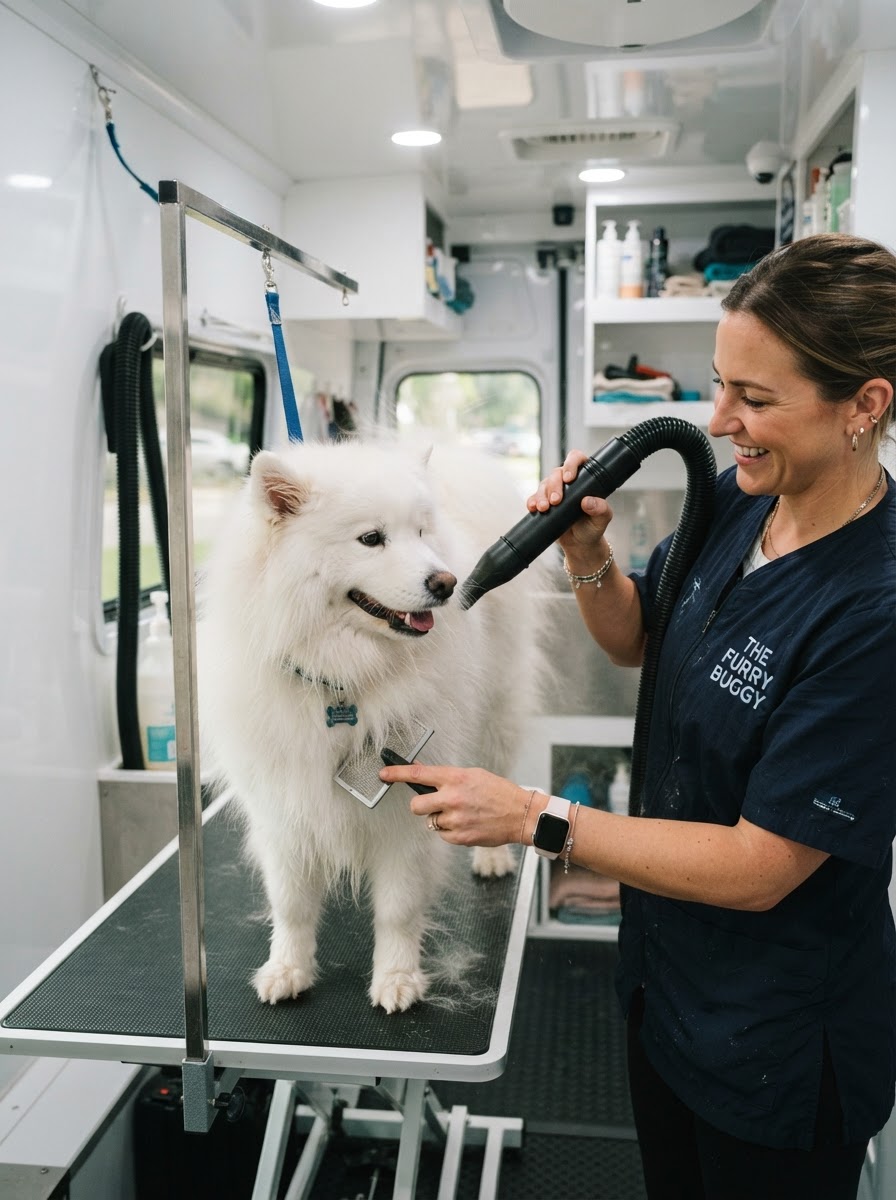
De-matting at Mufasa Pets Mobile Grooming is the careful process of working through tangled or matted areas of your pet's coat. Mats are tight clumps of hair that have become knotted together, often close to the skin. The groomer assesses each matting situation and works through tangles patiently where it is appropriate and comfortable for your pet. The service is delivered at your home as part of a one-on-one grooming appointment.
It is important to understand that de-matting is not always possible or advisable. Severe matting — especially mats that are tight against the skin, widespread, or causing skin irritation — may require a different approach, such as carefully clipping the matted hair short. The groomer will assess your pet's coat and recommend the best option honestly.
De-matting is available as a standalone service and may be included in grooming appointments depending on your pet's coat condition. Contact Mufasa to confirm what is needed for your pet.
Why mats form and why they matter
Mats form when loose hair, dirt, and moisture combine and the hair tangles and knots together. Without regular brushing, these tangles tighten and pull closer to the skin, forming mats. Long-haired and double-coated breeds are particularly prone to matting, especially in friction areas like behind the ears, under the legs, and around the collar.
Mats are more than a cosmetic issue. As they tighten, they pull on the skin, which can cause discomfort. They can also trap moisture and debris against the skin, creating an environment where skin irritation can develop. Severe matting can restrict movement and, in extreme cases, affect circulation.
This is why regular brushing and grooming are important for preventing mats, and why severe matting needs honest, careful attention rather than aggressive brushing that could hurt your pet.
- Mats form from loose hair, dirt, and moisture tangling together
- Long-haired and double-coated breeds are most prone to matting
- Mats pull on the skin and can cause discomfort
- Mats can trap moisture and debris against the skin
- Regular brushing prevents mats from forming
The de-matting process
The groomer begins by assessing the coat and identifying matted areas. Each mat is evaluated for how tight it is, how close it is to the skin, and whether it can be safely worked through. For mats that can be addressed, the groomer uses de-matting tools and careful technique to gently separate the tangled hair.
De-matting is done patiently, working from the outer edge of the mat inward, separating the hair gradually rather than pulling. The groomer monitors your pet's comfort throughout and stops or adjusts if your pet is uncomfortable. One-on-one mobile grooming allows for this patience.
For mats that are too tight, too close to the skin, or too widespread to safely brush out, the groomer will recommend a different approach — typically carefully clipping the matted hair short. This is often the kinder option for severely matted coats, and the groomer will explain why.
When de-matting is and isn't appropriate
De-matting is appropriate for loose to moderate tangles that can be separated without pulling hard on the skin. For these, patient work with the right tools can restore the coat without discomfort.
De-matting is not appropriate for severe matting — mats that are tight against the skin, widespread across the body, or causing skin irritation. In these cases, trying to brush out the mats would be uncomfortable or painful for your pet. The kinder approach is to carefully clip the matted hair short and start fresh, then maintain the coat with regular brushing to prevent mats from returning.
The groomer will always be honest about which situation applies to your pet. If clipping is the better option, they will explain why and discuss how to maintain the coat going forward. This honest guidance is part of how Mufasa treats every pet like family.
Dogs and cats: different matting considerations
Long-haired dog breeds — such as shih tzus, Lhasa apsos, Maltese, poodles, and many doodle crosses — are prone to matting, especially if their coats are not brushed regularly between grooming appointments. Friction areas behind the ears, under the legs, and around the collar are common trouble spots.
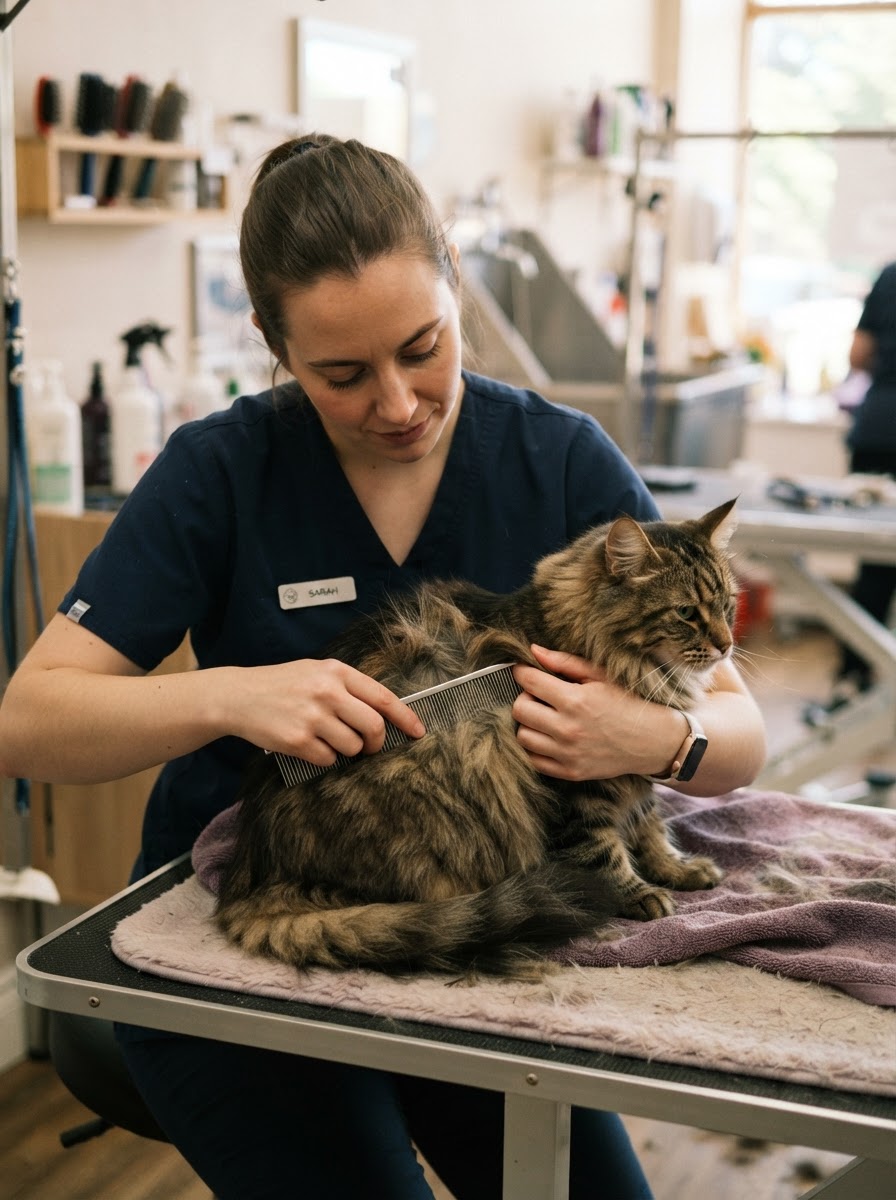
Long-haired cats — such as Persians and Maine Coons — can also develop mats, particularly if they are not brushed regularly. Cats that groom themselves less effectively, such as older cats or cats with mobility limitations, are especially prone to matting. Gentle, patient de-matting or careful clipping can help.
For both species, the key is prevention through regular brushing. The groomer can recommend the right brush and brushing routine for your pet's coat type to keep mats from forming between appointments.
How de-matting fits into a grooming appointment
De-matting may be part of a grooming appointment depending on your pet's coat condition. If your pet has tangles that can be safely worked through, the groomer will address them as part of the coat-care steps. For severe matting, the groomer will discuss the best approach before proceeding.
De-matting can be combined with brushing and de-shedding to manage both tangles and loose coat, and with a blow-dry and brushing finish for a smooth result. If the coat needs a fresh start after severe matting, a haircut and styling service can reshape the coat.
If you are unsure about your pet's coat condition, contact Mufasa before booking. Sharing photos or describing the matting helps the team prepare the right approach for your pet.
Preventing mats between appointments
The best way to manage matting is to prevent it. Regular brushing at home — several times a week for long-haired breeds, and daily for breeds prone to severe matting — keeps tangles from forming and tightening. Focus on friction areas: behind the ears, under the legs, the chest, and around the collar.
Use the right brush for your pet's coat type. The groomer can recommend the appropriate brush and demonstrate the technique. For long-haired breeds, a combination of a slicker brush and a comb is often effective.
Keep the coat dry and free of debris, as moisture and dirt contribute to matting. If your pet gets wet, dry and brush the coat promptly. Regular grooming appointments also help, as the groomer can address small tangles before they become mats.
What to expect after de-matting
After de-matting, the tangles that could be safely addressed will be gone, and the coat will be smoother and more manageable. If some mats required clipping, those areas will be shorter, and the groomer will explain how to maintain the coat as it grows back.
The groomer will share observations about your pet's coat and skin — for example, if there were signs of irritation under severe mats, which may warrant a veterinary check. This honest feedback helps you care for your pet going forward.
Because the service is at your home, your pet can settle immediately in their own space after the appointment. If the de-matting process was lengthy or your pet is tired, they can rest comfortably at home.
Local considerations for Orlando pets
Central Florida's warm, humid climate can contribute to matting. Humidity can make coats feel heavier and can cause loose hair to clump together more readily. Pets that swim or get wet in Florida's environment are also more prone to matting if the coat is not dried and brushed promptly.
Regular grooming that includes coat assessment and de-matting where appropriate helps manage these factors. The groomer can advise on an appropriate schedule based on your pet's coat type and lifestyle in Orlando's climate.
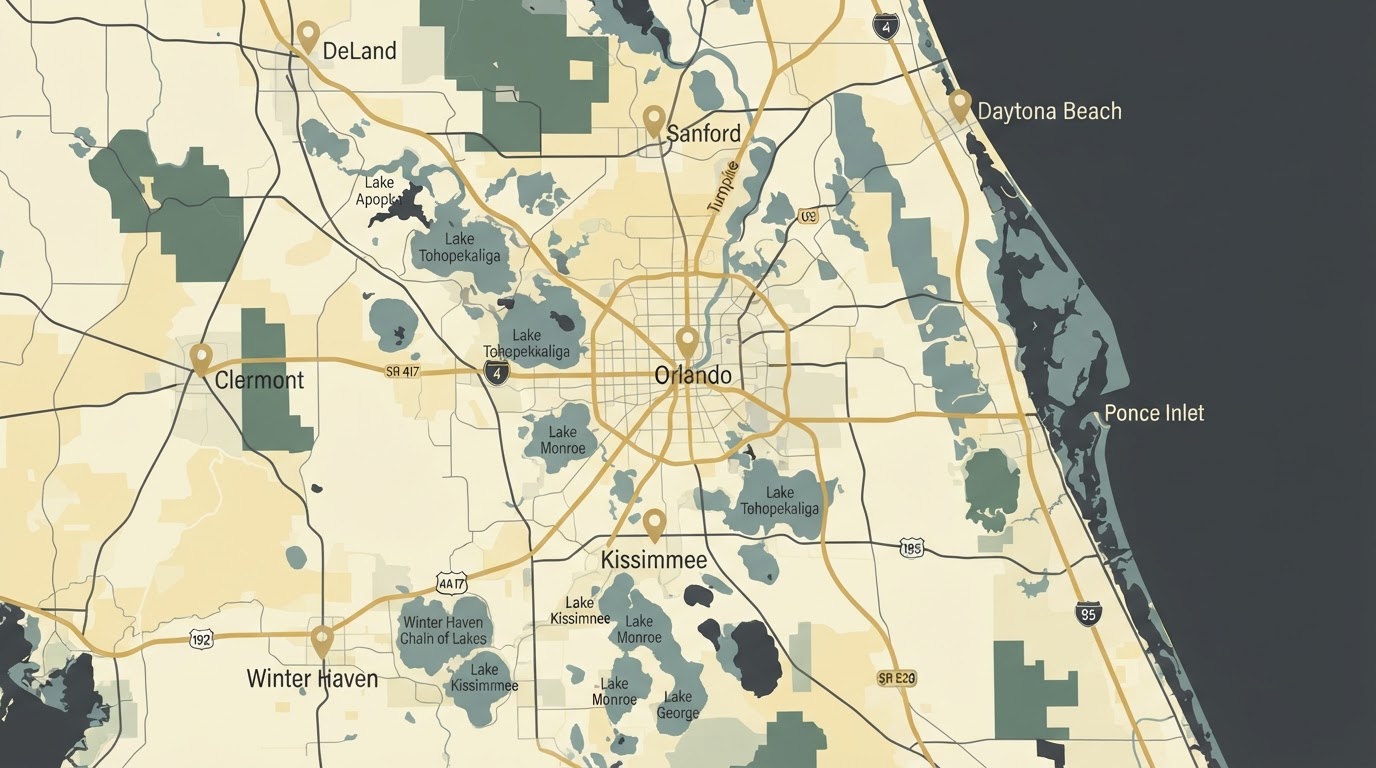
Mufasa serves Orlando and surrounding communities. You can confirm your service area by contacting the team. Because the service is mobile, de-matting is performed at your home as part of a one-on-one grooming appointment.
Pricing and how to book
De-matting availability and approach depend on your pet's coat condition. Contact Mufasa to discuss your pet's situation and confirm what is needed. For pets with severe matting, the groomer will recommend the most appropriate and comfortable approach.
To book, complete the appointment request form or call (407) 800-3103. Share your pet's details, including coat condition, and your service address. Your appointment is not confirmed until the Mufasa team responds.
You can also explore the full list of services to see how de-matting fits with other grooming options for your pet.
Understanding how mats affect your pet
Mats affect your pet in ways that go beyond appearance, which is why addressing them matters. As a mat tightens, it pulls on the skin continuously, creating a constant tugging sensation that can range from mild discomfort to genuine pain. For a pet with multiple mats across the body, this discomfort can be significant and can affect their mood, movement, and overall comfort.
Mats also trap moisture, dirt, and debris against the skin. In this trapped environment, the skin cannot breathe properly, and irritation can develop. In severe cases, the skin under a mat may become red, inflamed, or even infected. This is why severe matting is not just a grooming issue — it can become a welfare issue that needs prompt, careful attention.
This understanding guides the groomer's approach. For mild tangles, patient brushing is appropriate and comfortable. For severe matting, the kindest approach is often to carefully clip the matted hair short, relieving the pulling and allowing the skin to recover. The groomer always chooses the approach that is best for your pet's comfort and well-being, and will be honest about which situation applies.
- Mats pull continuously on the skin, causing discomfort
- Multiple mats can significantly affect a pet's comfort
- Mats trap moisture and debris against the skin
- Severe matting can lead to skin irritation or infection
- The groomer chooses the approach that is best for your pet's welfare
Starting fresh after severe matting
When severe matting requires clipping the coat short, it can feel like a setback, but it is often the best thing for your pet. Removing the matted hair relieves the pulling and discomfort immediately, allows the skin to breathe and recover, and gives you and the groomer a fresh start to maintain the coat properly as it grows back.
After a fresh start, regular brushing at home is essential to prevent mats from returning. The groomer can recommend the right brush for your pet's coat type and demonstrate the technique. For long-haired breeds prone to matting, brushing several times a week — and focusing on friction areas — keeps tangles from forming and tightening.
Regular grooming appointments also play a key role. The groomer can address small tangles before they become mats, keeping the coat manageable and comfortable. With consistent home brushing and regular professional grooming, most pets can avoid severe matting entirely. The haircut and styling service can then maintain a neat, comfortable coat length that is easy to care for.
Where mats commonly form
Mats tend to form in specific areas where friction, moisture, or movement causes hair to tangle. Behind the ears is a common trouble spot, because the hair there is fine and the movement of the head creates friction. Under the legs and in the armpits is another common area, where friction from walking and running causes tangles.
The chest, the area around the collar, and the base of the tail are also prone to matting. For pets that wear collars, the hair around the collar can mat from the constant friction. Long-haired pets may also develop mats on the belly and around the sanitary areas, particularly if moisture is present.
Knowing these trouble spots helps you focus your home brushing where it matters most. When you brush your pet, pay extra attention to behind the ears, under the legs, the chest, and around the collar. The groomer can point out your pet's specific trouble spots during grooming so you know where to focus at home. Regular attention to these areas prevents small tangles from becoming mats.
- Behind the ears: fine hair and head movement cause friction
- Under the legs and armpits: friction from walking and running
- Chest and collar area: friction from collars and movement
- Belly and sanitary areas: moisture contributes to matting
- Focus home brushing on these trouble spots
De-matting for cats specifically
Long-haired cats — such as Persians, Maine Coons, and Ragdolls — are particularly prone to matting, especially if they are not brushed regularly. Cats that groom themselves less effectively, such as older cats, cats with mobility limitations, or cats that are overweight, are especially at risk because they cannot reach all areas of their coat to self-groom.
For cats, de-matting requires particular patience and gentleness. Many cats are sensitive about being handled, especially in the areas where mats form. The groomer reads your cat's cues and works at a pace that suits your individual cat. For severely matted cats, careful clipping is often the kinder option, and the groomer will explain this honestly.
Prevention is especially important for long-haired cats. Daily brushing with the right tools keeps loose hair from tangling and forming mats. The groomer can recommend the right brush for your cat's coat type and demonstrate the technique. For cats that also shed heavily, de-matting can be combined with the brushing and de-shedding service to manage both tangles and loose coat.
What to share when booking
When you request an appointment for de-matting, it is very helpful to share information about your pet's coat condition. If you can, describe where the mats are, how widespread they are, and how long they have been present. Photos can be especially helpful — they let the team assess the situation and prepare the right approach before the appointment.
If your pet is anxious about grooming or sensitive about being handled, let the team know. The groomer can plan a patient, gentle approach and work at your pet's pace. For severely matted pets, the groomer will discuss whether patient brushing or careful clipping is the better option before proceeding, so there are no surprises.
If your pet has had matting issues before, or if you know your pet's coat is prone to matting, mention this so the groomer can recommend a preventive grooming schedule. Regular grooming that includes coat assessment and de-matting where appropriate keeps small tangles from becoming severe mats. See all available services on the services page.
Frequently asked questions
Can all mats be brushed out?+
Not always. Loose to moderate tangles can often be worked through, but severe matting tight against the skin may require careful clipping instead. The groomer will assess and recommend the best, most comfortable approach.
Is de-matting included in Full Grooming?+
De-matting is available depending on your pet's coat condition. Contact Mufasa to confirm what's needed for your pet.
Can I request de-matting on its own?+
Yes. Contact Mufasa to request de-matting as an individual service. Share your pet's coat condition so the team can prepare the right approach.
Is de-matting painful for my pet?+
The groomer works patiently and monitors your pet's comfort. For mats that cannot be safely brushed out, clipping is the kinder option. The groomer will always choose the approach that is most comfortable for your pet.
How can I prevent mats?+
Regular brushing at home — several times a week for long-haired breeds — prevents tangles from forming and tightening. Focus on friction areas like behind the ears and under the legs. The groomer can recommend the right brush and routine.
Do you de-mat cats?+
Yes. De-matting is available for long-haired cats, performed gently and patiently. For severely matted cats, careful clipping may be the kinder option.