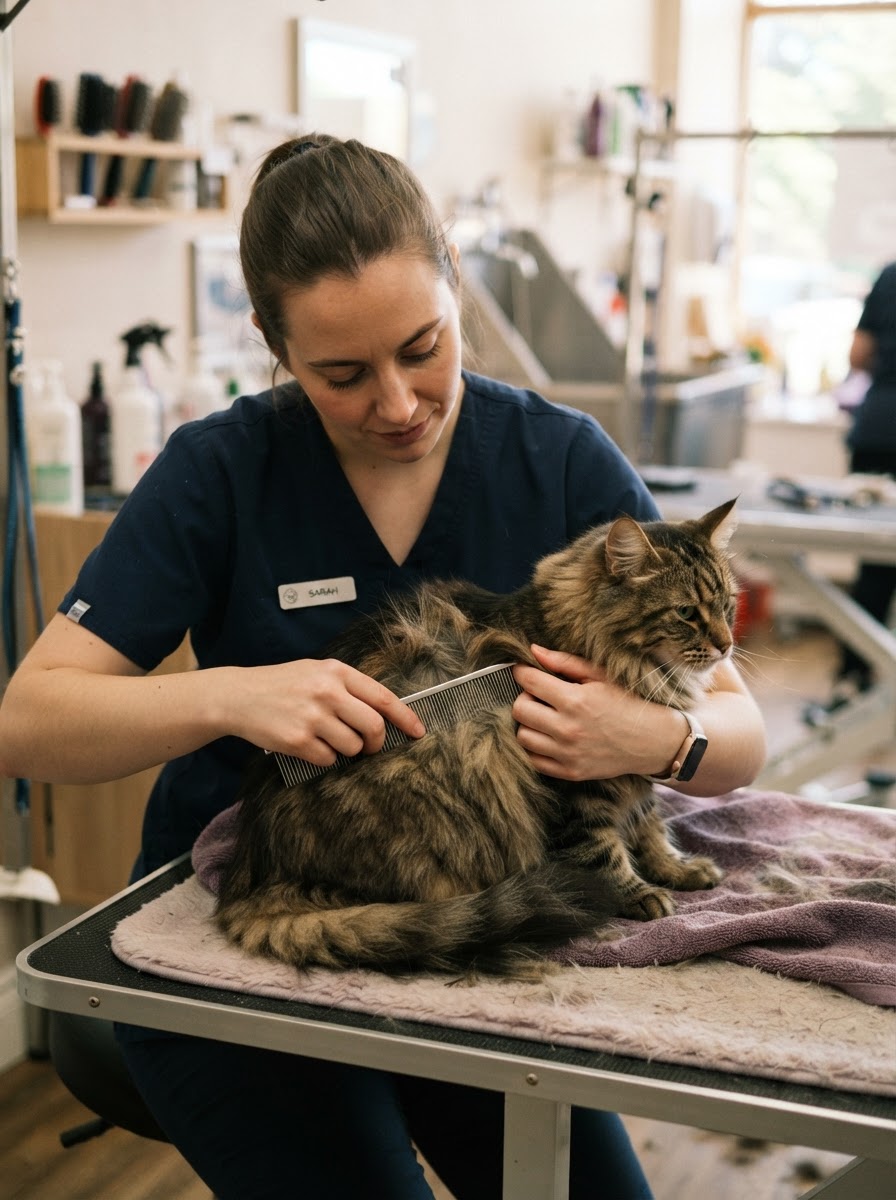
Preventing matting is one of the most effective ways to keep your pet's coat healthy and comfortable between grooming appointments. Mats form when loose hair tangles and clumps together, and they can become uncomfortable if left unaddressed. With regular brushing, attention to friction areas, and moisture management, you can significantly reduce the chance of mats forming. This guide explains how to prevent matting and what to discuss with the groomer before an appointment.
Understanding how mats form helps you prevent them. This guide pairs with the guide to what de-matting is and the guide comparing brushing out mats to a shorter haircut.
Brush regularly
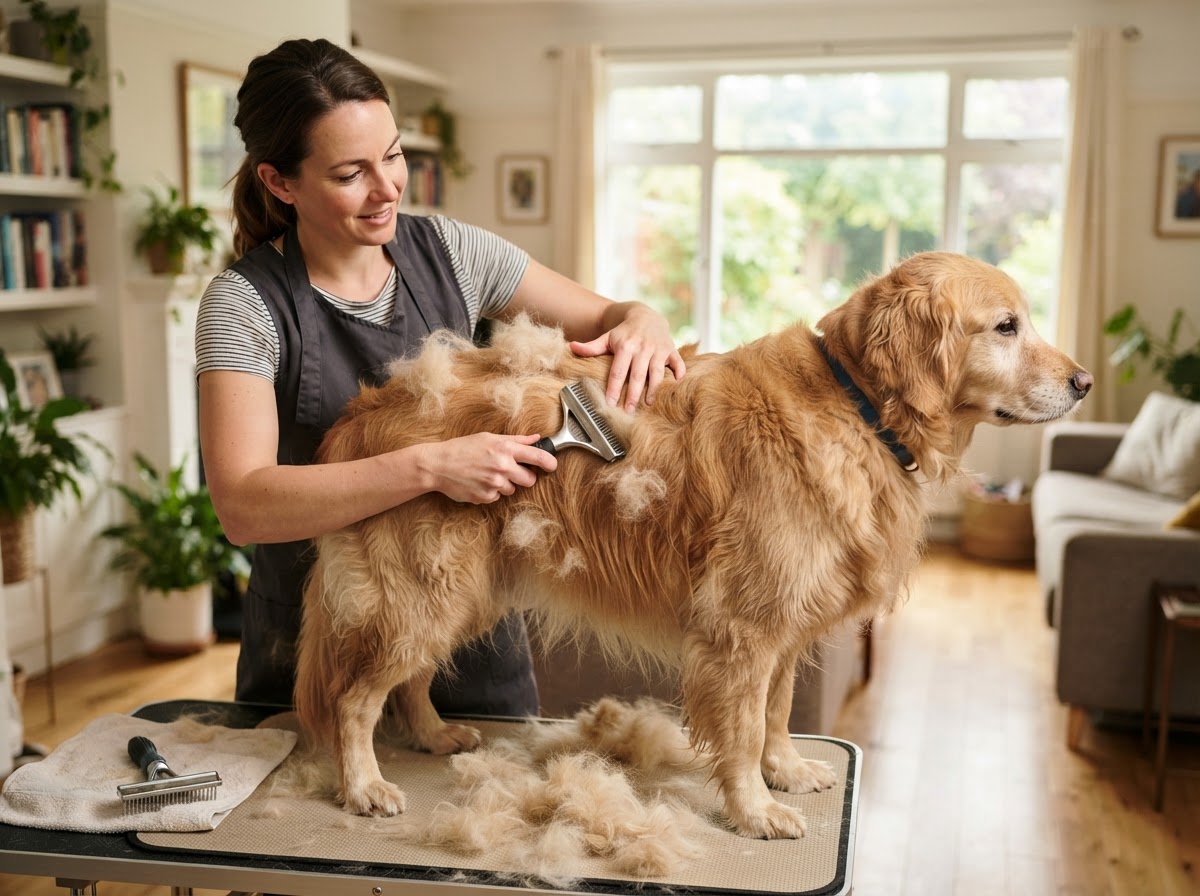
Regular brushing is the single most effective way to prevent matting. Brushing removes loose hair before it can tangle with the surrounding coat, and it keeps the coat manageable between professional grooming appointments. For most pets, brushing a few times a week is sufficient. Pets with longer, curlier, or denser coats may need daily brushing to stay mat-free.
The type of brush matters. Different coat types benefit from different tools, and using the right brush makes the process more effective and comfortable for your pet. If you are unsure which brush to use, the groomer can recommend one based on your pet's coat type. The guide to what groomers should know about your pet's coat covers coat-type information in detail.
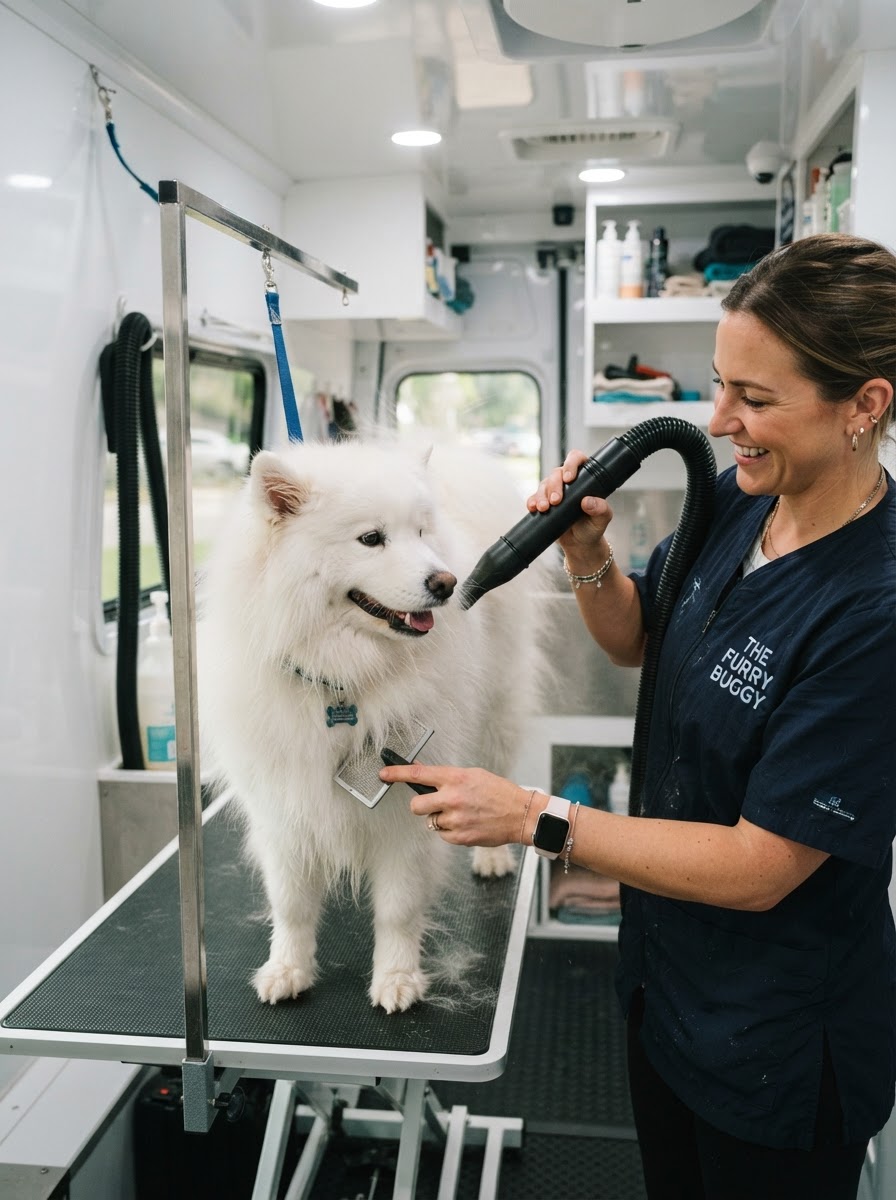
Brushing frequency by coat type
- Short, smooth coats: brush once a week to remove loose hair
- Medium coats: brush two to three times a week
- Long, curly, or dense coats: brush daily to prevent tangles
- Double-coated breeds: brush regularly, with extra attention during seasonal shedding
Focus on friction areas
Mats most commonly form in areas where friction occurs. Behind the ears, under the collar or harness, in the armpits, and around the rear are all prime spots for matting, because the hair rubs together and tangles more easily in those areas. Paying extra attention to these spots during brushing helps prevent mats from forming where they are most likely to appear.
When you brush, run your hand through the coat in these areas to check for any developing tangles. Catching a tangle early, while it is still loose, makes it much easier to address than waiting until it tightens into a mat. If you find a tangle that does not brush out easily, it may be the start of a mat that needs professional attention.
Check the friction zones
Mats most commonly form behind the ears, under collars and harnesses, in the armpits, and around the rear. Pay extra attention to these areas when brushing to catch tangles early.
Manage moisture
Moisture contributes to matting. When a coat gets wet from bathing, swimming, rain, or even heavy dew, and is not thoroughly dried and brushed afterward, the damp hair tangles more easily and can form mats as it dries. After any exposure to moisture, dry the coat thoroughly and brush it out to prevent tangles from setting in.
This is especially important for longer and denser coats, which hold more moisture and take longer to dry. If your pet swims or gets wet frequently, plan to dry and brush the coat each time. The guide to blow-drying and brushing covers how drying and brushing work together in professional grooming.
Consider coat length
Coat length affects the likelihood of matting. Longer coats tangle more easily and require more frequent brushing to stay mat-free. If you find that maintaining a longer coat between appointments is challenging, a shorter haircut may be a practical choice that reduces the chance of matting. The guide comparing short and longer haircuts covers the considerations around coat length.
There is no single right answer for coat length. The best choice depends on your pet's coat type, your ability to brush regularly at home, and your preferences. The groomer can advise on a length that balances your preferences with practical maintenance.

What to observe at home
Between grooming appointments, observe your pet's coat for signs of developing tangles or mats. Run your hand through the coat regularly, especially in the friction areas, and feel for any tight clumps of hair. If you notice tangles forming, increase the frequency of brushing in those areas.
Also watch for changes in the coat or skin, such as redness, irritation, or flaking. These may be signs of a skin concern that should be discussed with a veterinarian. The groomer can help you recognize when something is outside the scope of grooming, but they cannot diagnose or treat skin conditions.
Signs to watch for
- Tight clumps of hair that do not brush out easily
- Tangles forming in friction areas like behind the ears or under collars
- Changes in the coat texture or condition
- Redness, irritation, or flaking on the skin
- Signs of discomfort when the coat is touched
What to share with the groomer
Before the grooming appointment, share what you have observed about the coat. If you have found tangles or mats, let the groomer know where they are and how long they have been present. If you have been brushing regularly, share that too, because it helps the groomer understand the coat's maintenance history.
Also share any sensitivities your pet has about being brushed or handled in certain areas, and any skin concerns you have noticed. This information helps the groomer plan the appointment and choose the most comfortable approach for addressing any mats. You can share all of this when you request a mobile grooming appointment.
Building a prevention routine
Preventing matting is an ongoing routine, not a one-time effort. By brushing regularly, focusing on friction areas, managing moisture, and choosing a practical coat length, you can keep your pet's coat healthy and significantly reduce the chance of mats forming. When mats do appear, addressing them promptly with professional help prevents them from becoming severe.
The goal is a coat that is comfortable for your pet and manageable for you between appointments. With a consistent routine and open communication with the groomer, you can keep your pet's coat in good condition and catch any issues early, before they become uncomfortable. The Full Grooming service includes brushing that helps maintain the coat between appointments.
This article provides general pet-grooming information. Appropriate grooming methods depend on the individual pet, coat condition, temperament, health, and requested service. Confirm service suitability and preparation instructions with Mufasa Pets Mobile Grooming. Contact a veterinarian regarding medical, dental, skin, ear, or behavioral health concerns.
Frequently Asked Questions
How can I prevent my pet's coat from matting?+
Brush regularly to remove loose hair before it tangles, focus on friction areas like behind the ears and under collars, manage moisture by drying and brushing after baths or swimming, and consider a practical coat length that you can maintain.
How often should I brush my pet to prevent matting?+
For most pets, brushing a few times a week is sufficient. Pets with longer, curlier, or denser coats may need daily brushing. The right frequency depends on the coat type, and the groomer can recommend a schedule.
Where do mats most commonly form?+
Mats most commonly form in friction areas: behind the ears, under the collar or harness, in the armpits, and around the rear. Pay extra attention to these areas when brushing.
Does moisture cause matting?+
Yes. When a coat gets wet and is not thoroughly dried and brushed, the damp hair tangles more easily and can form mats as it dries. After baths, swimming, or rain, dry the coat thoroughly and brush it out.
Should I choose a shorter coat to prevent matting?+
A shorter coat is easier to maintain and less prone to matting. If maintaining a longer coat between appointments is challenging, a shorter haircut may be a practical choice. The groomer can advise on a length that balances your preferences with maintenance.
What should I tell the groomer about matting?+
Share where you have found tangles or mats, how long they have been present, whether you have been brushing regularly, any sensitivities your pet has about handling, and any skin concerns you have noticed.
What if I notice skin irritation along with matting?+
Skin irritation may be a sign of a concern that needs veterinary attention. The groomer cannot diagnose or treat skin conditions. Share what you have noticed, and the groomer may advise a veterinary visit if the skin appears irritated.
Request a Mobile Grooming Appointment
We come to your home throughout Central Florida.