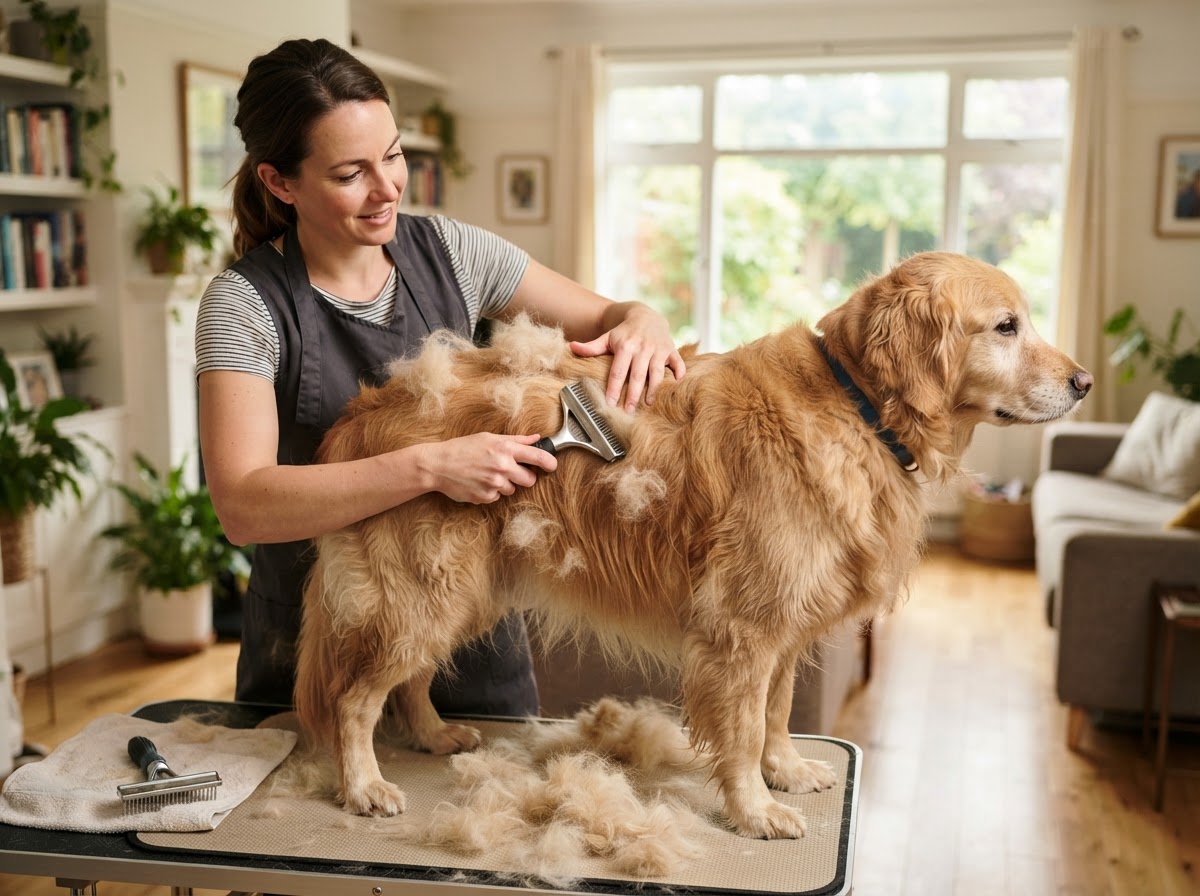
Pet de-matting is a coat-care service that addresses tangled, matted areas in the coat. Mats are tight knots of hair that have clumped together, often close to the skin, and they can become uncomfortable for the pet if left unaddressed. De-matting carefully works through these tangles to restore the coat to a manageable condition. This guide explains what matting is, when de-matting may be needed, and why the coat must be evaluated before choosing an approach.
Understanding matting helps you recognize when it is developing and when professional attention is appropriate. This guide pairs with the guide comparing brushing out mats to a shorter haircut and the guide to preventing matting.
What matting is and how it forms
A mat is a tight clump of hair that has tangled together, often close to the skin. Mats form when loose hair is not brushed out and instead tangles with the surrounding coat. Over time, the tangle tightens and pulls closer to the skin, creating a dense knot that can be difficult to remove. Mats are most common in areas where friction occurs, such as behind the ears, under the collar or harness, in the armpits, and around the rear.
Coats that are longer, curlier, or denser are more prone to matting, because the hair tangles more easily. Moisture from bathing, swimming, or rain can also contribute to matting if the coat is not thoroughly dried and brushed afterward. Regular brushing is the most effective way to prevent mats from forming.
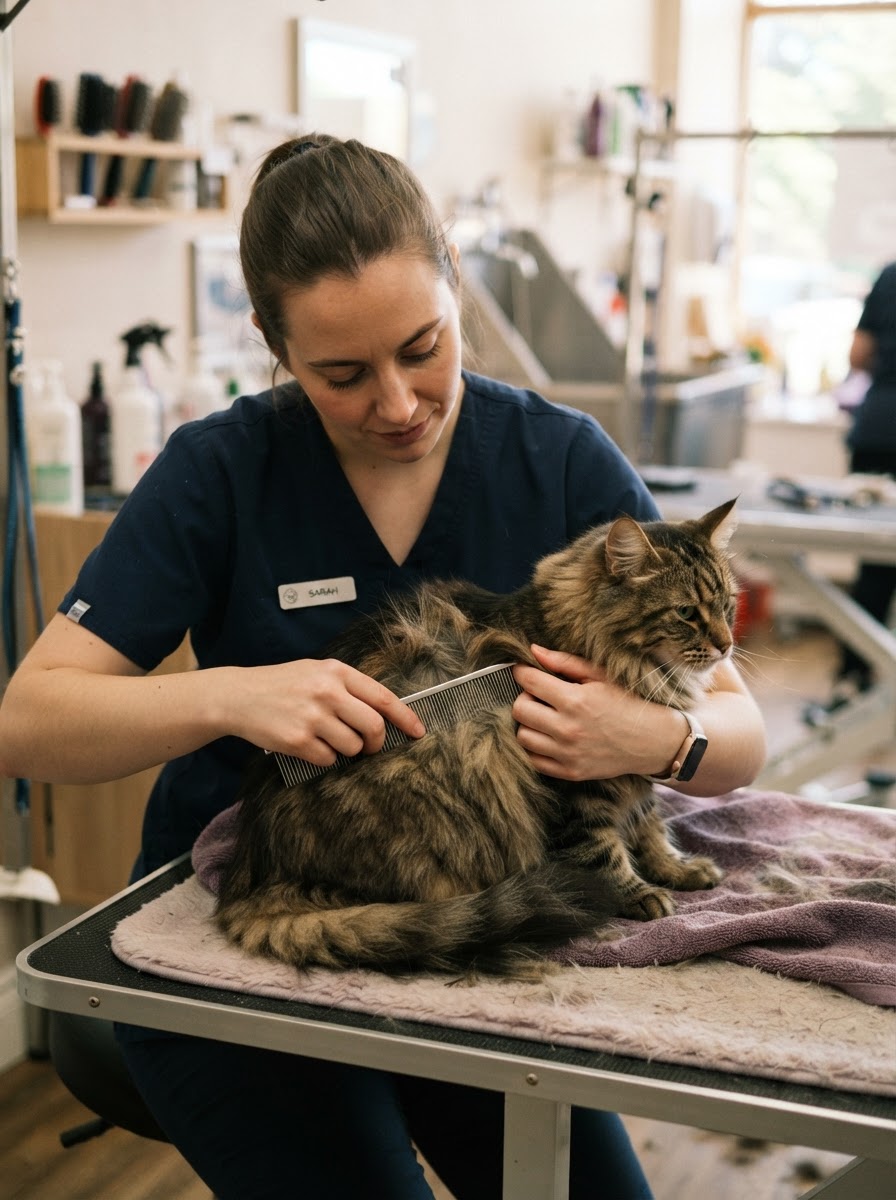
Common areas for mats
- Behind the ears, where friction from collars and head movement occurs
- Under the collar or harness, where rubbing concentrates
- In the armpits, where the legs rub against the body
- Around the rear and sanitary areas, where moisture is common
- Along the flanks, where the coat is long and dense
Why mats matter
Mats matter because they can become uncomfortable for the pet. As a mat tightens, it pulls on the surrounding hair, which can create tension on the skin. In severe cases, mats can trap moisture and debris close to the skin, which may contribute to irritation. For these reasons, addressing mats before they become severe is important for the pet's comfort.
The groomer's goal is to address mats in a way that is comfortable and safe for the pet. How a mat is addressed depends on its severity, location, and the condition of the surrounding coat. The guide comparing brushing out mats to a shorter haircut covers the options in detail.
Comfort is the priority
Mats can pull on the skin and become uncomfortable. The groomer addresses them in a way that prioritizes the pet's comfort, whether by carefully brushing them out or, for severe mats, clipping them short.
When de-matting may be needed
De-matting may be needed when mats have formed in the coat and need to be addressed. If you can feel tight clumps of hair when you run your hand through the coat, or if you can see tangles that do not brush out easily, those may be mats that need professional attention. The groomer can assess the coat during the appointment and determine whether de-matting is appropriate.
Not every tangle is a mat. Surface tangles can often be brushed out at home, while true mats are tight knots that require careful, professional attention. If you are unsure whether your pet has mats, the groomer can help you identify them and recommend the best approach. You can discuss this when you request a mobile grooming appointment.
Why the coat must be evaluated first
Before choosing how to address mats, the groomer must evaluate the coat. The severity, location, and condition of the mats all affect the approach. Some mats can be carefully brushed out, while others are too tight or too close to the skin to brush out comfortably. In those cases, clipping the matted areas short may be the more comfortable option.
The groomer evaluates each mat individually and chooses the approach that is most comfortable for the pet. They will not force a brush through a mat that is too tight, because that would pull on the skin and cause discomfort. Honest information about the coat condition helps the groomer make the right decision.
What de-matting cannot do
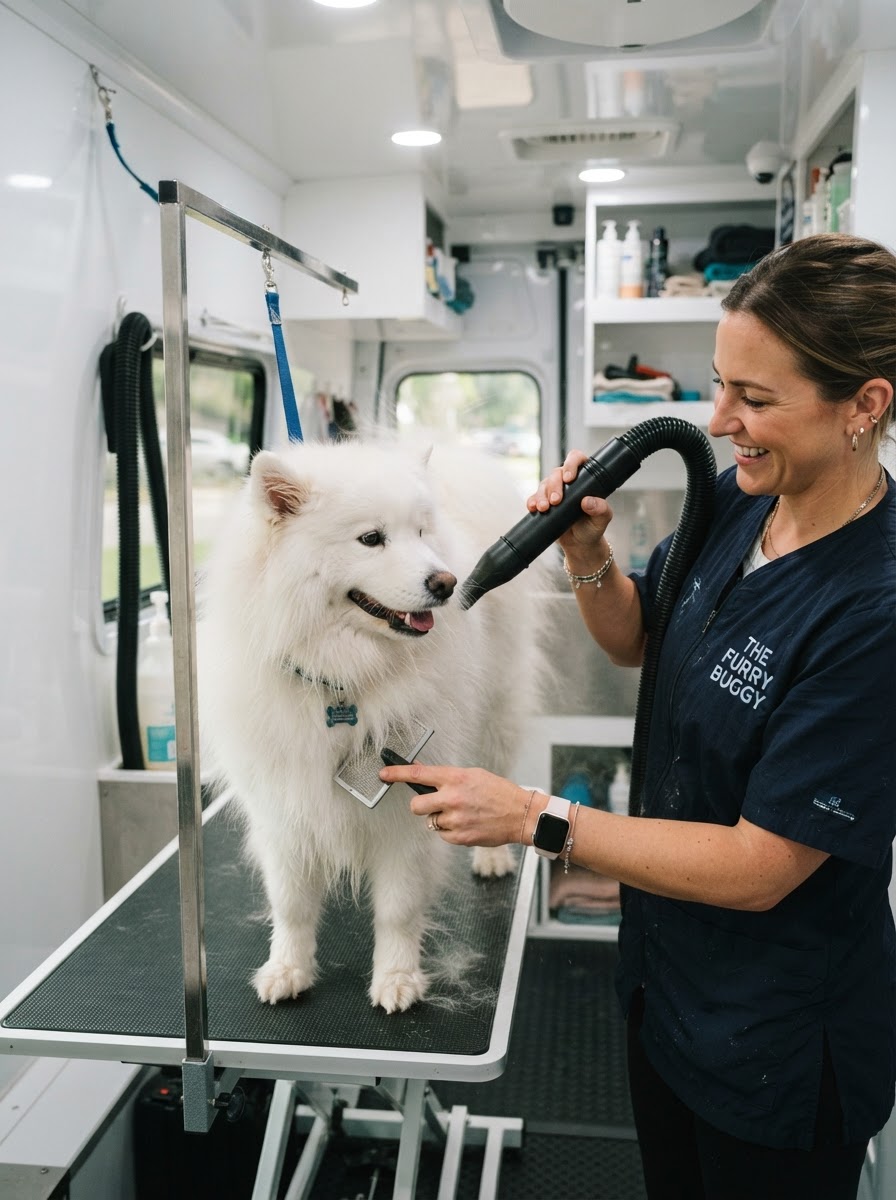
De-matting cannot address every mat by brushing it out. Some mats are too severe, too tight, or too close to the skin to brush out without causing discomfort. In those cases, the groomer may recommend clipping the matted areas short instead. This is not a failure of the service; it is a decision made in the pet's best interest.
De-matting also does not prevent future mats from forming. Preventing mats requires regular brushing at home and maintaining the coat between grooming appointments. The guide to preventing matting covers how to develop a prevention routine.
Setting realistic expectations
The key to a satisfactory de-matting experience is realistic expectations. Some mats can be brushed out, while others may need to be clipped short. The groomer will choose the approach that is most comfortable for the pet, and they will explain their reasoning so you understand the decision.
If the coat has severe, widespread matting, the most comfortable option may be a shorter haircut all over to remove the mats and start fresh. This is a common and responsible approach for coats that have become heavily matted. By understanding the options and trusting the groomer's evaluation, you can ensure your pet receives appropriate, comfortable care.
This article provides general pet-grooming information. Appropriate grooming methods depend on the individual pet, coat condition, temperament, health, and requested service. Confirm service suitability and preparation instructions with Mufasa Pets Mobile Grooming. Contact a veterinarian regarding medical, dental, skin, ear, or behavioral health concerns.
Frequently Asked Questions
What is pet de-matting?+
De-matting is a coat-care service that addresses tangled, matted areas in the coat. Mats are tight knots of hair that have clumped together, often close to the skin, and the groomer carefully works through them to restore the coat to a manageable condition.
How do mats form?+
Mats form when loose hair is not brushed out and instead tangles with the surrounding coat. Over time, the tangle tightens and pulls closer to the skin. They are most common in areas of friction like behind the ears, under collars, and in the armpits.
Can all mats be brushed out?+
No. Some mats are too tight or too close to the skin to brush out without causing discomfort. In those cases, the groomer may clip the matted areas short instead. The approach is chosen based on what is most comfortable for the pet.
How do I know if my pet has mats?+
If you feel tight clumps of hair when you run your hand through the coat, or see tangles that do not brush out easily, those may be mats. The groomer can assess the coat during the appointment and help you identify them.
Does de-matting prevent future mats?+
No. De-matting addresses existing mats, but preventing future mats requires regular brushing at home and maintaining the coat between grooming appointments.
What if the coat is severely matted?+
For severe, widespread matting, the most comfortable option may be a shorter haircut all over to remove the mats and start fresh. This is a common and responsible approach for heavily matted coats.
How do I request a de-matting service?+
Request an appointment through the contact page or call (407) 800-3103. Mention that your pet has mats, and the groomer will evaluate the coat and choose the most comfortable approach.
Request a Mobile Grooming Appointment
We come to your home throughout Central Florida.