
Preparing for a de-shedding appointment helps the groomer provide the most effective treatment for your pet. Sharing information about the coat, sensitivities, matting, recent bathing, and skin concerns allows the groomer to plan the best approach and set realistic expectations. This guide explains what to share before a de-shedding appointment and how to prepare your pet.
Being prepared helps the de-shedding treatment go smoothly and ensures your pet is comfortable throughout. It pairs with the guide to how de-shedding works and the guide comparing brushing to de-shedding.
Share coat information
The groomer needs to understand your pet's coat to plan the de-shedding treatment effectively. Share what you know about the coat type, whether your pet has a double coat, how heavy the shedding is, and whether there are seasonal patterns. If you are unsure about the coat type, the groomer can assess it during the appointment.
Also share how recently the coat was brushed or groomed. If the coat has not been brushed in a while, there may be more loose hair to remove, and the groomer can plan accordingly. Honest information about the coat condition helps the groomer set realistic expectations for the treatment.
Mention any sensitivities
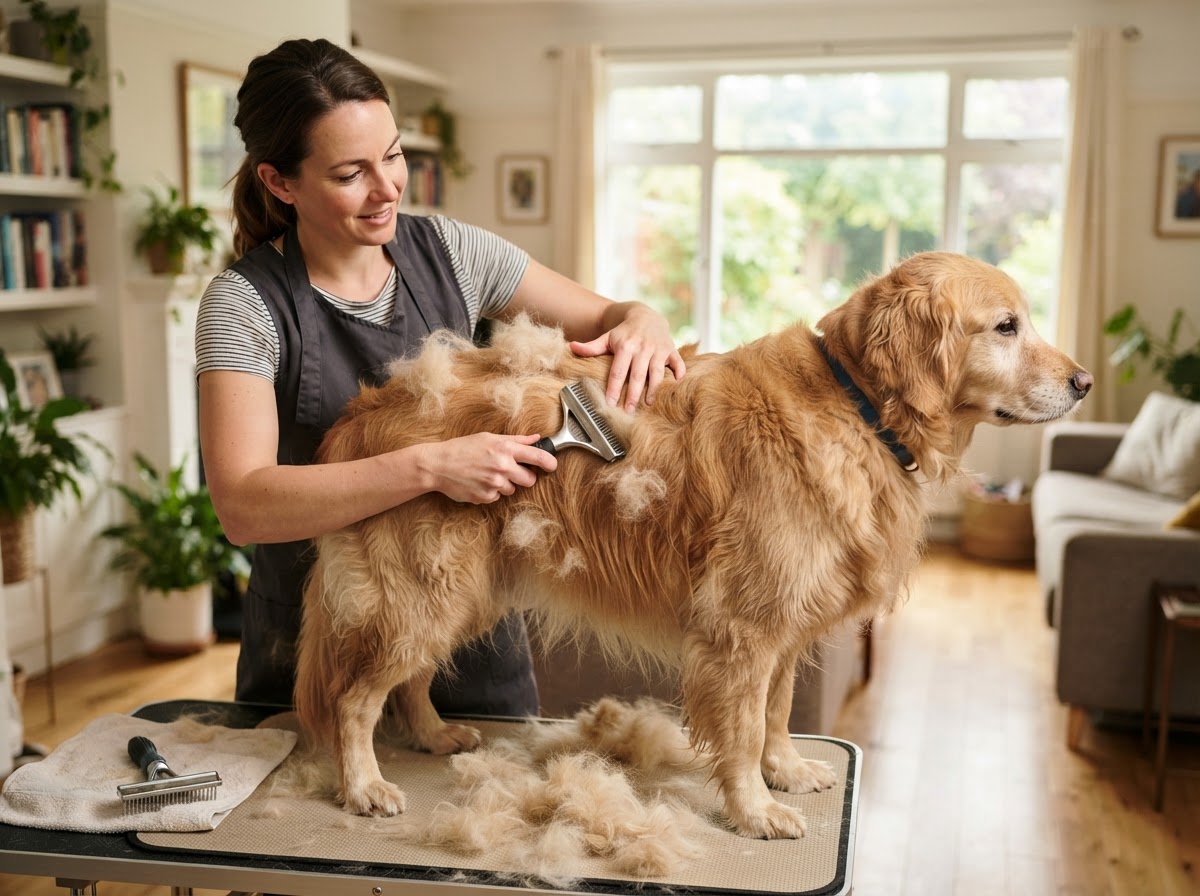
De-shedding involves working tools through the coat, and some pets may be sensitive to the sensation, especially in areas where the coat is dense or the skin is sensitive. If your pet is sensitive about being brushed or handled in certain areas, let the groomer know beforehand.
The groomer will work at your pet's pace and adjust the approach to keep the appointment comfortable. They may take breaks, use a gentler technique, or focus on the areas where your pet is most comfortable first. Sharing sensitivity information helps the groomer provide better, more comfortable care.
Comfort comes first
If your pet is sensitive about brushing or handling, tell the groomer. They will work at your pet's pace, take breaks, and adjust the technique to keep the de-shedding treatment comfortable.
Report any matting
If the coat has matting, report it before the de-shedding appointment. Mats can interfere with de-shedding, because the tools need to move freely through the coat to reach the undercoat. Matted areas may need to be addressed first, either by carefully brushing them out or by clipping them short, depending on the severity.
The guide to de-matting covers how matting is addressed in detail. If the matting is severe, the groomer may recommend addressing it before proceeding with de-shedding, or they may adjust the de-shedding approach to work around the matted areas. Sharing this information beforehand helps the groomer plan.
Note recent bathing and grooming
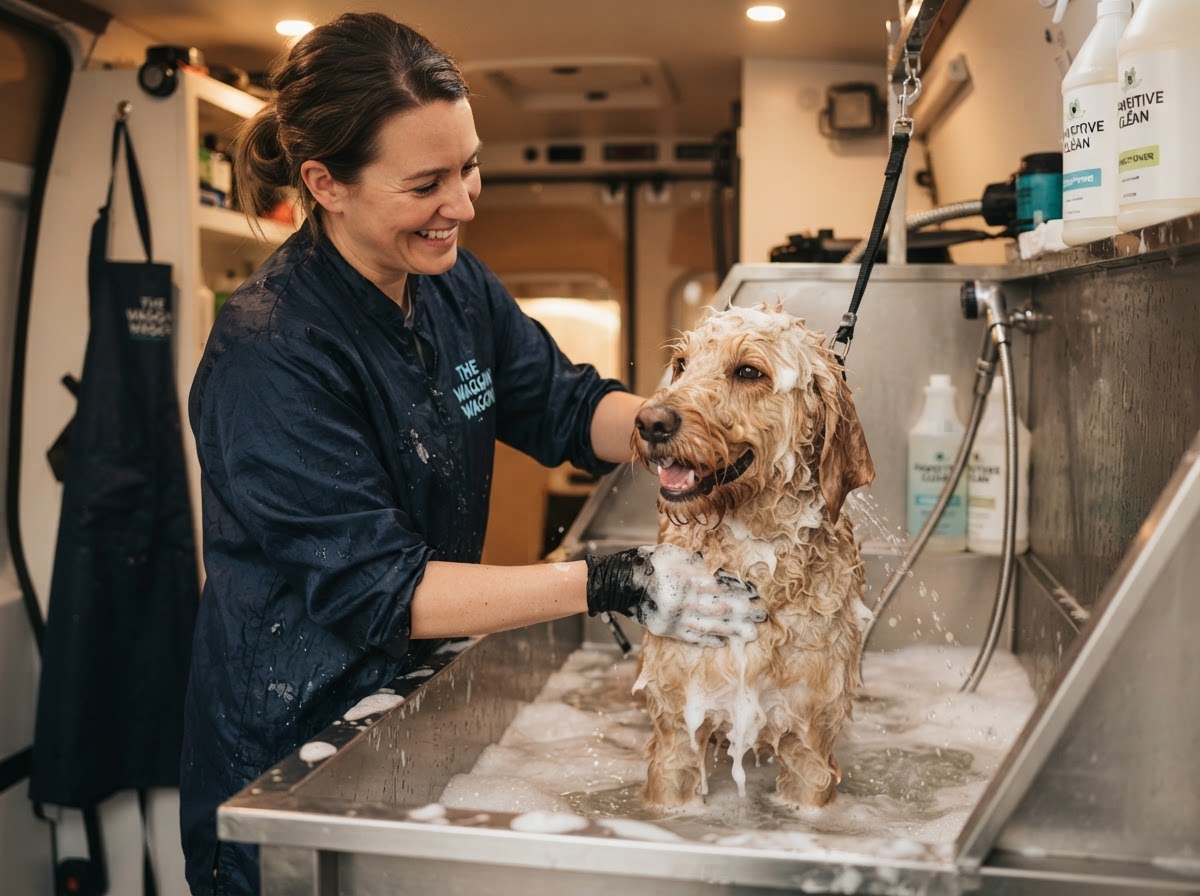
Let the groomer know when your pet was last bathed or groomed. De-shedding is often most effective when combined with a bath, because bathing helps loosen the undercoat. If your pet was bathed recently, the groomer can adjust the treatment accordingly. If it has been a while, the bath and blow-dry steps will help maximize the de-shedding results.
Also share whether your pet has had any reactions to bathing or grooming products in the past. If your pet has sensitive skin or has reacted to shampoos or conditioners, the groomer needs to know so they can choose appropriate products. You can share this when you request a mobile grooming appointment.
Report any skin concerns
If you have noticed any skin concerns, such as redness, irritation, flaking, or hot spots, report them before the appointment. De-shedding tools work through the coat and near the skin, so skin concerns are important for the groomer to know about. If the skin appears irritated, the groomer may adjust the approach or recommend a veterinary visit first.
The groomer cannot diagnose or treat skin conditions. If there are signs of a skin issue, the appropriate next step is veterinary care. The groomer can help you recognize when a skin concern is outside the scope of grooming and advise on when to consult a veterinarian.
Skin concerns to report
- Redness, irritation, or inflammation
- Flaking, scabs, or hot spots
- Bald patches or unusual hair loss
- Lumps or bumps on the skin
- Signs of discomfort when the coat is touched
Set realistic expectations
Before the appointment, it helps to set realistic expectations for the de-shedding treatment. The treatment will remove loose undercoat and reduce shedding around the home, but it will not stop shedding entirely. For double-coated breeds, the reduction can be significant, but some shedding will continue because it is a natural process.
If your pet is shedding much more than usual, that may be a sign of an underlying health issue rather than a grooming matter. In that case, a veterinary visit is the appropriate first step. The groomer can help you recognize when shedding seems outside the normal range, but they cannot diagnose or treat medical causes of excessive shedding.
What to confirm before arrival
Before the groomer arrives, confirm that you have shared all relevant information about the coat, sensitivities, matting, recent bathing, and skin concerns. Make sure the grooming can take place in a calm, accessible area at your home. If anything changes between the time you request the appointment and the day of the visit, let the groomer know when they arrive.
By being prepared and sharing the right information, you help the groomer provide the most effective and comfortable de-shedding treatment for your pet. Whether the treatment is straightforward or requires adjustments, honest communication ensures your pet receives appropriate, attentive care. You can share all relevant details when you request a mobile grooming appointment.
This article provides general pet-grooming information. Appropriate grooming methods depend on the individual pet, coat condition, temperament, health, and requested service. Confirm service suitability and preparation instructions with Mufasa Pets Mobile Grooming. Contact a veterinarian regarding medical, dental, skin, ear, or behavioral health concerns.
Frequently Asked Questions
What should I tell the groomer before a de-shedding appointment?+
Share coat information including coat type and shedding patterns, any sensitivities about brushing or handling, any matting, when the pet was last bathed or groomed, and any skin concerns such as redness or irritation.
What if my pet's coat has matting?+
Report it before the appointment. Mats can interfere with de-shedding because the tools need to move freely through the coat. Matted areas may need to be addressed first, either by brushing them out or clipping them short depending on severity.
My pet is sensitive about being brushed. Can they still get de-shedding?+
Yes. Tell the groomer about the sensitivity. They will work at your pet's pace, take breaks, use a gentler technique, and adjust the approach to keep the treatment comfortable.
Should I bathe my pet before the de-shedding appointment?+
It is not necessary. De-shedding is often combined with a bath during the grooming appointment, because bathing helps loosen the undercoat. Let the groomer know when your pet was last bathed so they can plan accordingly.
What if I notice skin concerns before the appointment?+
Report them. De-shedding tools work near the skin, so skin concerns are important. If the skin appears irritated, the groomer may adjust the approach or recommend a veterinary visit first. The groomer cannot diagnose or treat skin conditions.
Will the de-shedding treatment stop my pet from shedding?+
No. The treatment reduces shedding by removing loose undercoat, but it does not stop the natural shedding process. Set realistic expectations: the reduction can be significant for double-coated breeds, but some shedding will continue.
How do I share this information before the appointment?+
Share all relevant details about the coat, sensitivities, matting, recent bathing, and skin concerns when you request a mobile grooming appointment. If anything changes before the visit, let the groomer know when they arrive.
Request a Mobile Grooming Appointment
We come to your home throughout Central Florida.