Regular brushing and professional de-shedding are two different approaches to coat care, and they serve different purposes. Regular brushing maintains the coat by removing surface hair and preventing tangles, while de-shedding is a focused treatment that removes loose undercoat to reduce shedding around the home. Understanding the difference helps you choose the right approach for your pet.
This guide compares the two so you can make an informed decision based on your pet's coat type, shedding pattern, and maintenance needs. It pairs with the guide to how de-shedding works and the guide to home brushing and professional grooming.
What regular brushing does
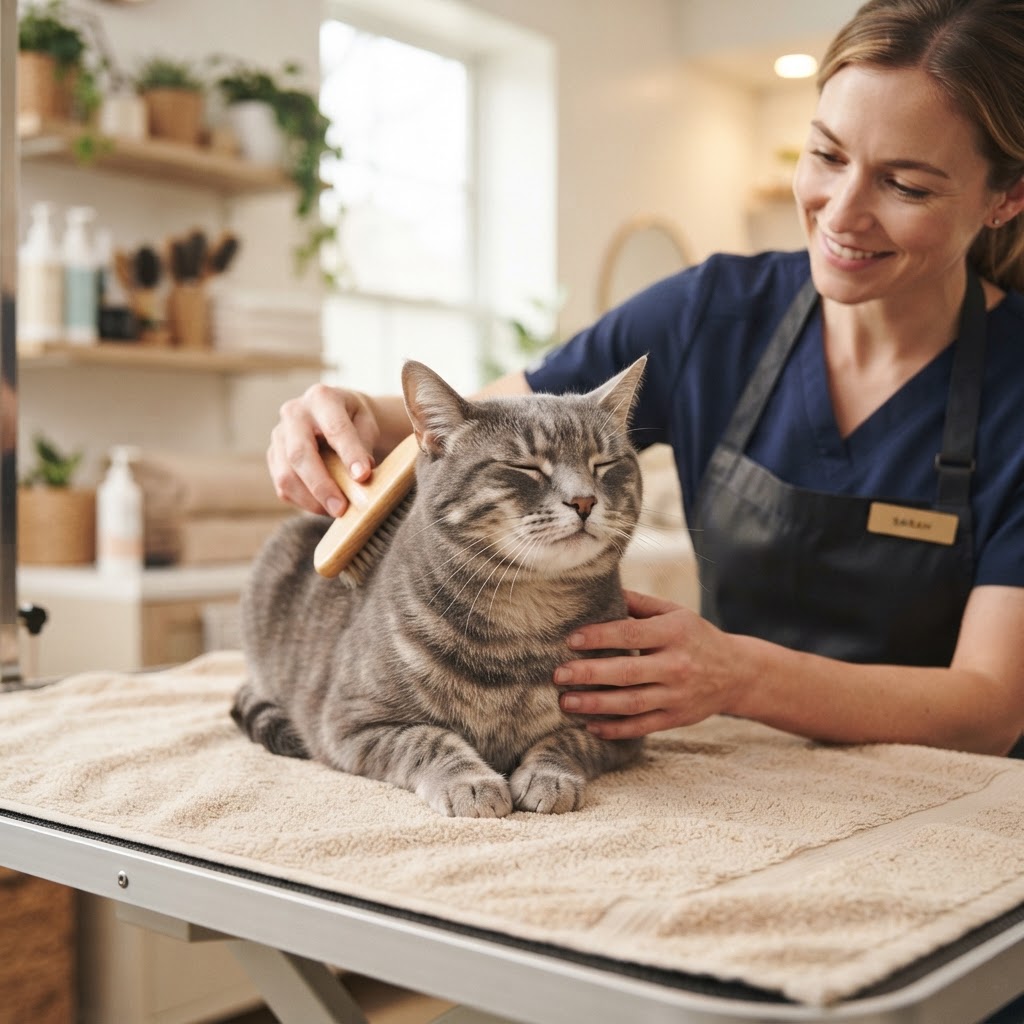
Regular brushing is a maintenance step that removes loose surface hair, prevents tangles and matting, and distributes natural oils through the coat. It is something you can do at home between grooming appointments, and it is also included in professional grooming services. Brushing keeps the top layer of the coat tidy and helps prevent the tangles that can develop into mats.
For most pets, regular brushing is the foundation of coat care. It does not reach deep into the undercoat the way de-shedding does, but it keeps the coat manageable and reduces the amount of loose hair on the surface. The guide to blow-drying and brushing covers how brushing fits into a professional grooming appointment.
What de-shedding treatment does
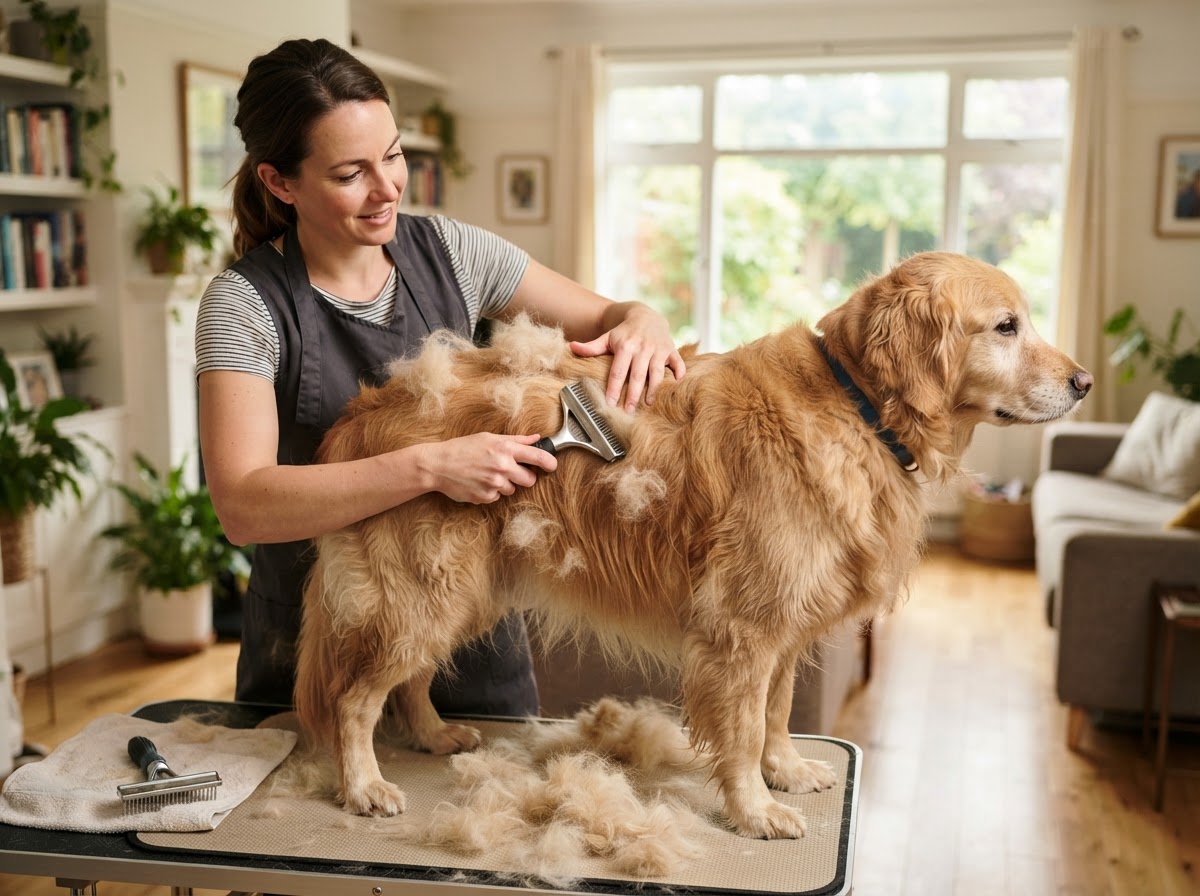
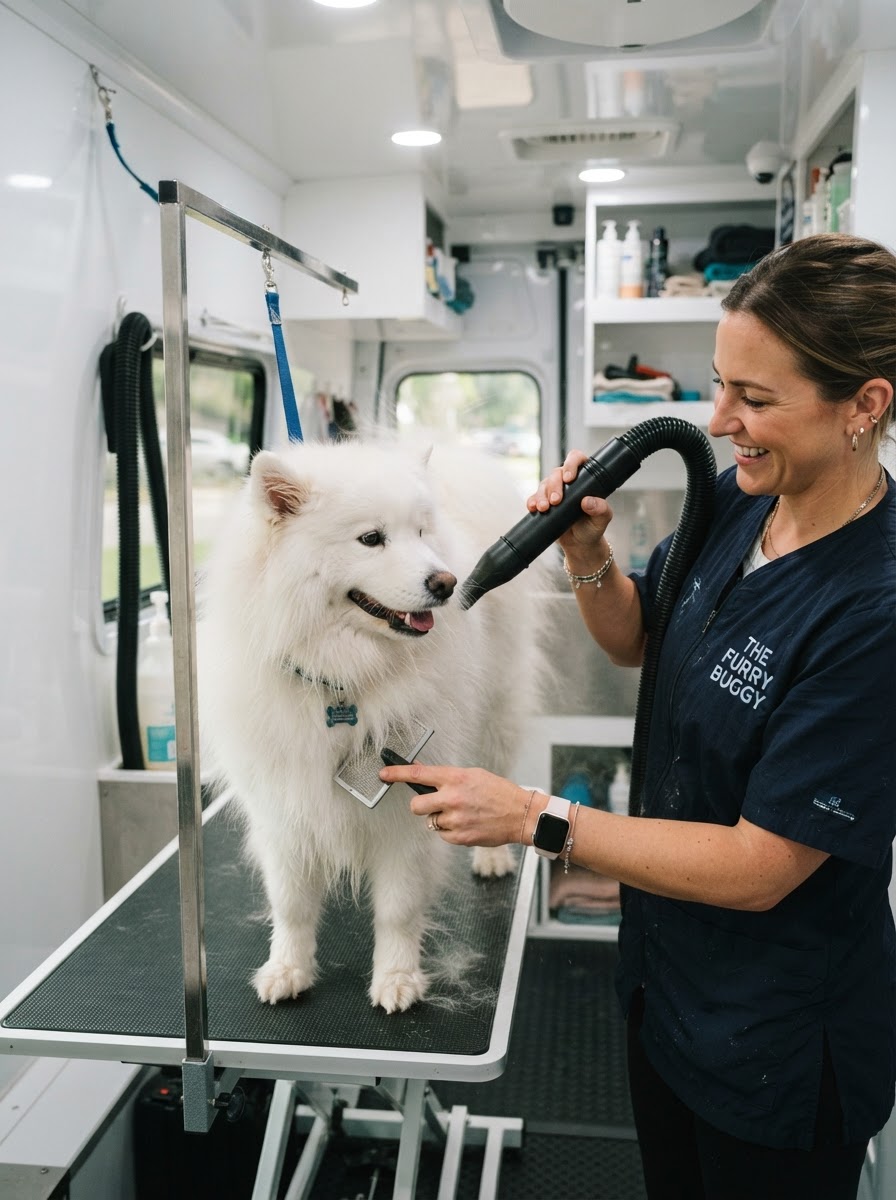
De-shedding is a focused treatment that uses specialized tools to reach into the undercoat and remove loose hair that has already detached but is still trapped in the coat. It goes deeper than regular brushing and is designed specifically to address the loose undercoat that causes heavy shedding around the home. De-shedding is often combined with bath and blow-dry for maximum effectiveness.
For pets with heavy undercoats, de-shedding can remove a significant amount of loose hair that regular brushing cannot reach. The guide to how de-shedding works explains the process and its realistic benefits in detail.
Key differences at a glance
| Feature | Regular Brushing | De-shedding Treatment |
|---|---|---|
| Depth | Surface and top coat | Deep into the undercoat |
| Purpose | Maintenance and tangle prevention | Loose undercoat removal |
| Frequency | Regular, often weekly | Seasonal or as needed |
| Best for | All pets | Double-coated breeds |
| Can be done at home | Yes | Best by a groomer |
Different depths, different purposes
Regular brushing maintains the top coat and prevents tangles. De-shedding reaches into the undercoat to remove loose hair. Both are valuable, but they serve different needs.
When regular brushing is enough
For many pets, regular brushing is sufficient. Pets with single coats, short-haired breeds, and pets that do not have a dense undercoat typically do well with regular brushing at home and the brushing included in grooming services. If your pet does not shed heavily and the coat stays manageable between grooming appointments, regular brushing may be all you need.
Regular brushing is also the right approach for preventing tangles and matting, which is a daily maintenance concern for pets with longer coats. The guide to preventing matting covers how brushing fits into a matting-prevention routine.
When de-shedding makes sense
De-shedding makes sense for pets with heavy undercoats, especially double-coated breeds that shed in large quantities. If you are finding large amounts of loose hair around the home, especially during seasonal shedding periods, a de-shedding treatment can help manage that shedding by removing the loose undercoat at its source.
De-shedding is also a good choice when regular brushing does not seem to keep up with the shedding. If you are brushing regularly and still finding excessive loose hair, the undercoat may need the deeper attention that de-shedding provides. You can request a mobile grooming appointment and discuss whether de-shedding is appropriate for your pet.

How they work together
Regular brushing and de-shedding are not mutually exclusive. In fact, they work best together. Regular brushing at home maintains the coat between professional appointments, while de-shedding during grooming appointments addresses the loose undercoat that home brushing cannot fully reach. This combination keeps the coat healthy and manageable year-round.
The Full Grooming service includes brushing and blow-dry, which help manage loose hair. For pets that need focused de-shedding, the groomer can include that treatment as part of the appointment. Discussing your pet's shedding pattern with the groomer helps them recommend the right combination of services.
Choosing based on coat type
Your pet's coat type is the most important factor in choosing between regular brushing and de-shedding. Single-coated pets typically need only regular brushing, while double-coated breeds benefit from both regular brushing and periodic de-shedding. If you are unsure about your pet's coat type, the groomer can assess it during the appointment and advise on the best approach.
By understanding the difference between regular brushing and de-shedding, you can develop a coat-care routine that fits your pet's needs. Whether that means regular brushing at home, periodic de-shedding treatments, or a combination of both, the goal is a healthy, manageable coat and a comfortable pet.
This article provides general pet-grooming information. Appropriate grooming methods depend on the individual pet, coat condition, temperament, health, and requested service. Confirm service suitability and preparation instructions with Mufasa Pets Mobile Grooming. Contact a veterinarian regarding medical, dental, skin, ear, or behavioral health concerns.
Frequently Asked Questions
What is the difference between brushing and de-shedding?+
Regular brushing maintains the top coat by removing surface hair and preventing tangles. De-shedding is a focused treatment that reaches into the undercoat to remove loose hair that has already detached, reducing shedding around the home.
Does my pet need de-shedding or just regular brushing?+
It depends on the coat type. Single-coated pets typically need only regular brushing. Double-coated breeds that shed heavily benefit from de-shedding, especially during seasonal shedding periods. The groomer can advise based on your pet's coat.
Can I do de-shedding at home?+
Regular brushing can be done at home, but de-shedding is best performed by a groomer who has specialized tools and can combine the treatment with bath and blow-dry for maximum effectiveness.
Is de-shedding included in Full Grooming?+
The Full Grooming service includes brushing and blow-dry, which help manage loose hair. For pets needing focused de-shedding, discuss it with the groomer so the treatment can be included in the appointment.
How often should I brush my pet at home?+
For most pets, brushing a few times a week is sufficient. Pets with longer coats may need daily brushing to prevent tangles. The groomer can recommend a suitable frequency based on your pet's coat type.
Will de-shedding stop my pet from shedding?+
No. De-shedding reduces shedding by removing loose undercoat, but it does not stop the natural shedding process. It addresses hair that has already detached, reducing the amount that ends up in your home.
How do I know if my pet has an undercoat?+
Double-coated breeds have a dense undercoat beneath the top coat. If you are unsure, the groomer can assess your pet's coat type during the appointment and advise on whether de-shedding is appropriate.
Request a Mobile Grooming Appointment
We come to your home throughout Central Florida.