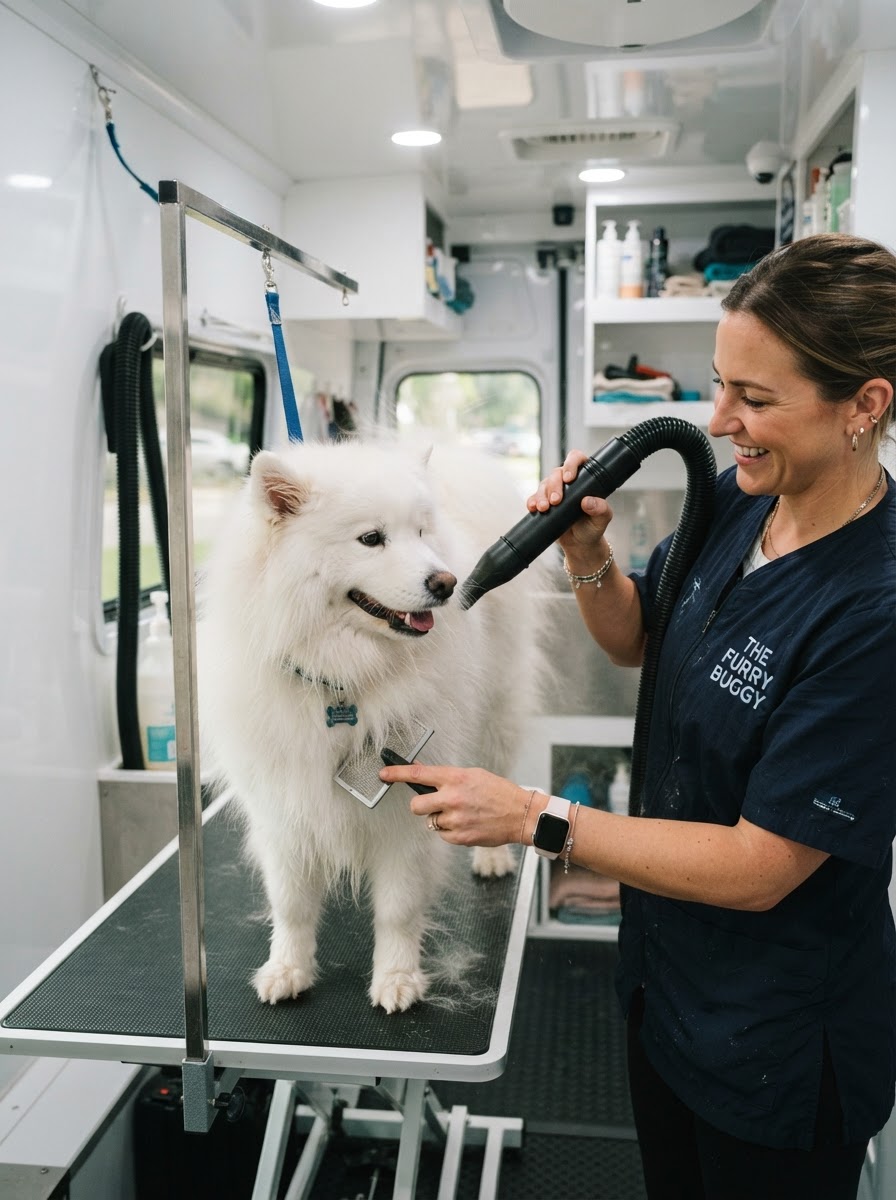
The more a groomer knows about your pet's coat before they begin brushing, the better they can care for it. Coat type, existing tangles, sensitivities, and skin concerns all shape how brushing should be approached, and sharing these details helps the groomer work safely and effectively. This guide covers the coat information that helps a mobile grooming appointment go smoothly, from coat type to handling preferences.
Good information protects your pet's comfort and helps the groomer choose the right tools and technique. It pairs with the guide to blow-drying and brushing and the guide to home brushing and professional grooming, which explain how brushing fits into the broader grooming process.
Coat type and characteristics
Coat type is the foundation of how brushing is approached. A single coat, a double coat, a curly coat, and a wire coat each behave differently and respond to different brushes and techniques. Telling the groomer about your pet's coat type, and anything you have noticed about how it sheds or mats, helps them prepare the right approach from the start.
If you are unsure of the technical name for your pet's coat type, that is fine. Describing what you observe is just as useful. You might say that the coat sheds heavily twice a year, that it forms tangles behind the ears, or that it curls tightly when it grows out. These observations give the groomer practical information they can use, even without formal terminology.
Existing knots and tangles
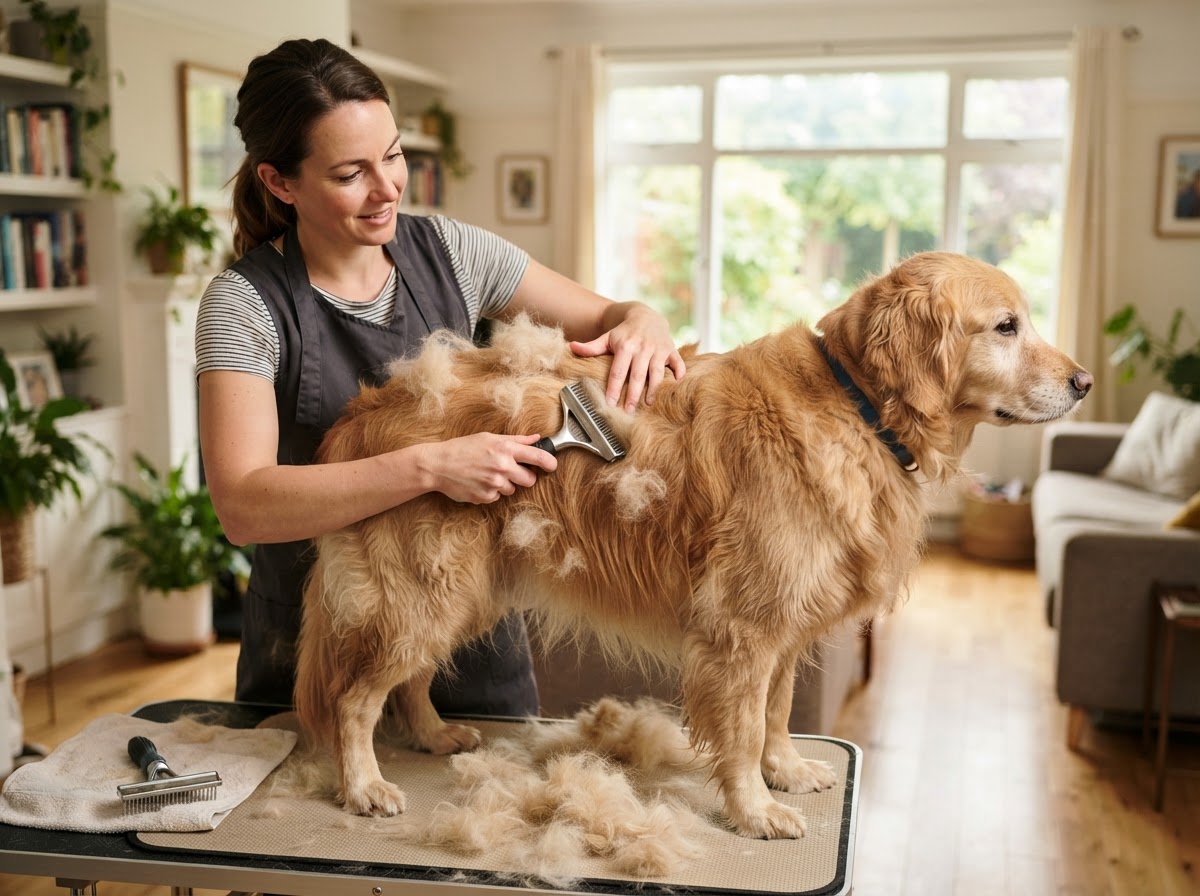
Be honest about any knots or tangles you have noticed, especially where they are located. Common trouble spots include behind the ears, under the legs, around the collar or harness area, and at the base of the tail. Pointing these out helps the groomer give those areas careful attention rather than discovering them mid-brush, when working them out may be less comfortable for your pet.
If the tangles are severe or close to the skin, let the groomer know in advance. Severe matting may require a different approach than routine brushing, and in some cases a shorter cut is the more comfortable option. The guide to de-matting explains how matting affects grooming decisions. Being upfront allows the groomer to plan rather than react.
Common tangle trouble spots
- Behind the ears, where friction and moisture collect
- Under the legs and in the armpits
- Around the collar or harness friction line
- At the base of the tail
- Along the belly where the coat is finer
Sensitivities and handling preferences
Many pets have specific areas where they are sensitive to being touched or brushed. Some dislike having their paws handled, others are protective of their face or ears, and some react to brushing in certain spots. Telling the groomer about these sensitivities allows them to adjust their approach, work more slowly in those areas, or use a gentler technique.
Handling preferences are equally useful. If your pet responds well to a calm voice, prefers frequent short breaks, or has a favorite way of being steadied, share that with the groomer. These details help the groomer build trust with your pet during the appointment, which makes brushing and the rest of the groom easier for everyone. The guide to what to tell a mobile groomer covers this kind of information more broadly.
Recent grooming and coat history
Let the groomer know when your pet was last groomed and what was done. If it has been a while, the coat may need more work, and the groomer can plan accordingly. If your pet had a difficult experience previously, or conversely a very positive one, that context helps the groomer set the right tone and pace for this visit.
Also mention any home brushing you have been doing, including how often and with what tool. This tells the groomer what kind of maintenance the coat has been receiving and helps them gauge its current condition. If you have been unable to brush as much as you would like, say so honestly. The groomer would rather know the real situation than assume a routine that is not happening.
Honesty helps
Groomers are not judging your home care. They want accurate information so they can choose the right approach for your pet's actual coat condition, whatever that is.
Skin concerns to mention
If your pet has any skin concerns, share them with the groomer before brushing begins. This includes areas of redness, flakiness, spots that your pet has been scratching, lumps, or any recent changes you have noticed. The groomer can work carefully around sensitive areas and avoid aggravating them. For anything that seems medical, the groomer will likely advise a veterinary visit.
Grooming-related brushing does not treat skin conditions, and a groomer cannot diagnose them. But sharing what you observe helps the groomer avoid causing discomfort and gives you another set of eyes on your pet's skin. If you notice anything concerning, the guide to ear cleaning versus veterinary care illustrates the kind of boundary between grooming care and veterinary care that applies to skin concerns as well.
Putting it all together
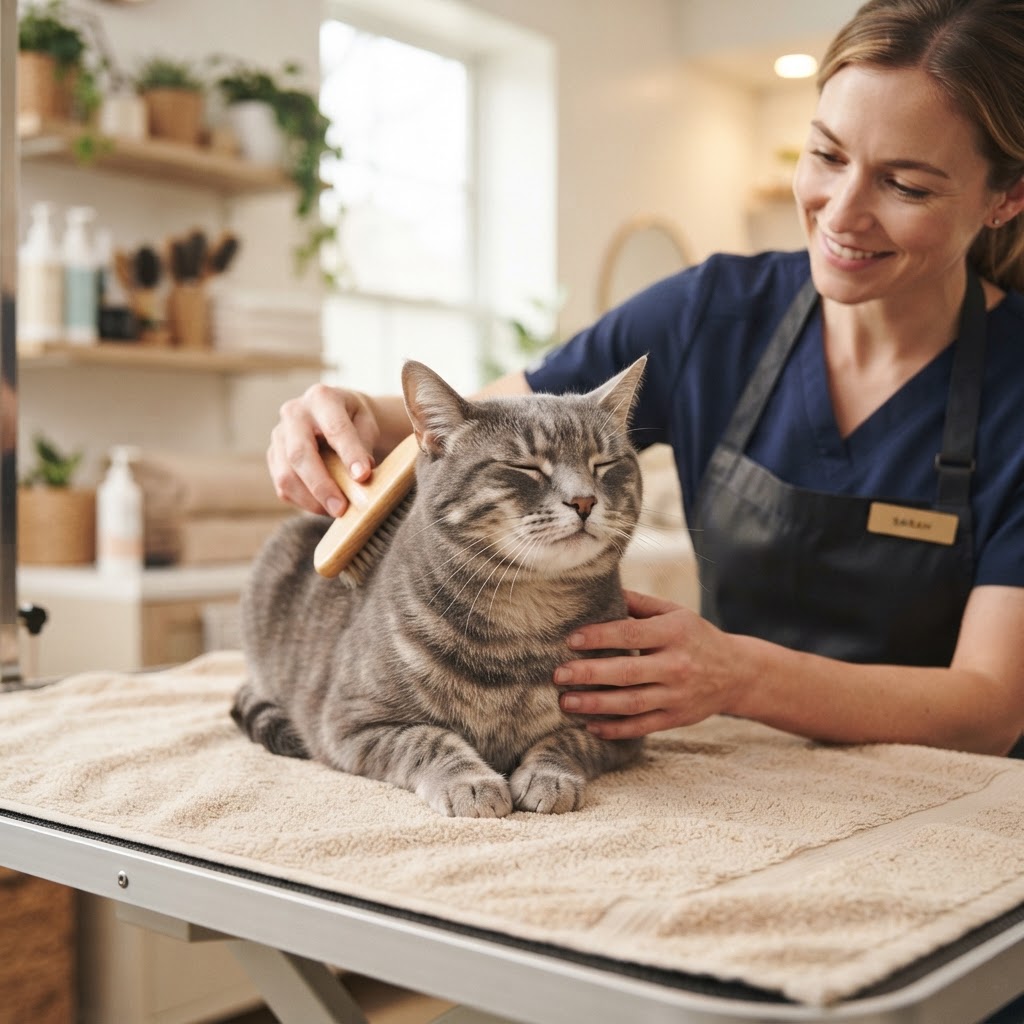
Before the appointment, take a moment to note the key details: coat type and what you have observed about shedding or matting, any tangles and where they are, sensitivities and handling preferences, recent grooming history, and any skin concerns. You do not need to be exhaustive; a few honest observations are enough to give the groomer a clear picture.
When you request a mobile grooming appointment, you can mention that you have coat information to share, and the team can note it for the groomer. During the appointment, the groomer will also ask questions and assess the coat directly. Your input and their assessment together lead to the best approach for your pet's coat, keeping brushing safe, effective, and comfortable.
Sharing coat information is a small effort that makes a real difference. By telling the groomer about coat type, tangles, sensitivities, history, and skin concerns, you help them brush your pet's coat in the way that best suits its condition and your pet's comfort.
This article provides general pet-grooming information. Appropriate grooming methods depend on the individual pet, coat condition, temperament, health, and requested service. Confirm service suitability and preparation instructions with Mufasa Pets Mobile Grooming. Contact a veterinarian regarding medical, dental, skin, ear, or behavioral health concerns.
Frequently Asked Questions
What should I tell the groomer about my pet's coat before brushing?+
Share the coat type and what you have noticed about shedding or matting, any tangles and where they are, sensitivities and handling preferences, recent grooming history, and any skin concerns. A few honest observations are enough.
Do I need to know the technical name for my pet's coat type?+
No. Describing what you observe is just as useful. You might say the coat sheds heavily twice a year, forms tangles behind the ears, or curls tightly when it grows out.
Should I tell the groomer about tangles I have noticed?+
Yes, especially where they are located. Common trouble spots include behind the ears, under the legs, around the collar, and at the base of the tail. Pointing them out helps the groomer give those areas careful attention.
What if the tangles are severe?+
Let the groomer know in advance. Severe matting may require a different approach than routine brushing, and in some cases a shorter cut is the more comfortable option.
Should I mention my pet's sensitivities?+
Yes. If your pet is sensitive about certain areas being touched or brushed, tell the groomer so they can adjust their approach, work more slowly, or use a gentler technique.
Can the groomer treat skin concerns during brushing?+
No. Grooming-related brushing does not treat skin conditions, and a groomer cannot diagnose them. Share what you observe so the groomer can work carefully, and consult a veterinarian for anything that seems medical.
How do I share coat information before the appointment?+
When you request an appointment, mention that you have coat information to share. The team can note it for the groomer, and the groomer will also ask questions and assess the coat during the visit.
Request a Mobile Grooming Appointment
We come to your home throughout Central Florida.