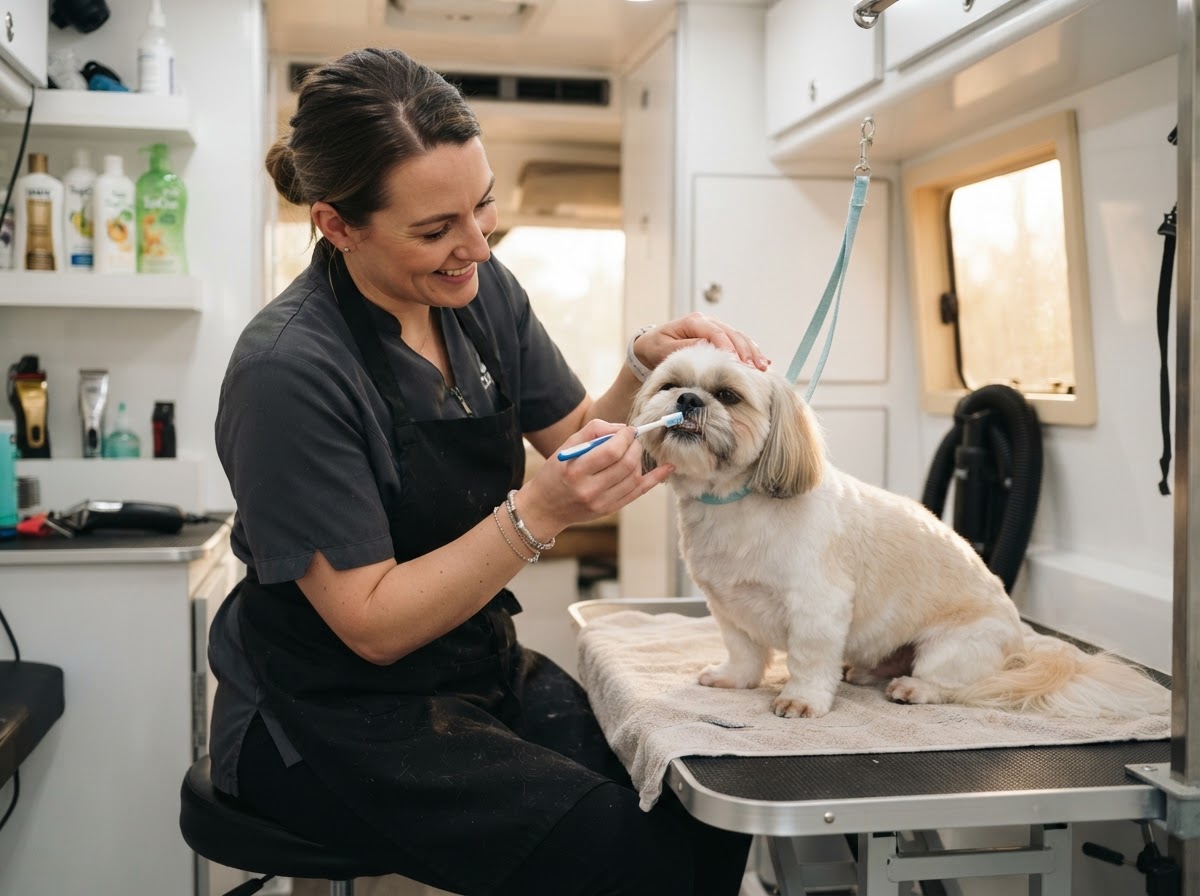
Routine ear cleaning during grooming and veterinary care for ear problems are two different things, and knowing the difference helps you get your pet the right care at the right time. Grooming-related ear cleaning keeps the visible outer ear tidy, while veterinary care diagnoses and treats conditions inside the ear. This guide explains where grooming care ends and veterinary care begins, so you can recognize when a concern goes beyond a grooming appointment.
This is not about choosing one over the other. Both have a role. Routine exterior cleaning supports general tidiness, and veterinary care addresses medical concerns. The guide to what ear cleaning includes explains the grooming side, and this guide focuses on the boundary between the two.
What routine ear cleaning does
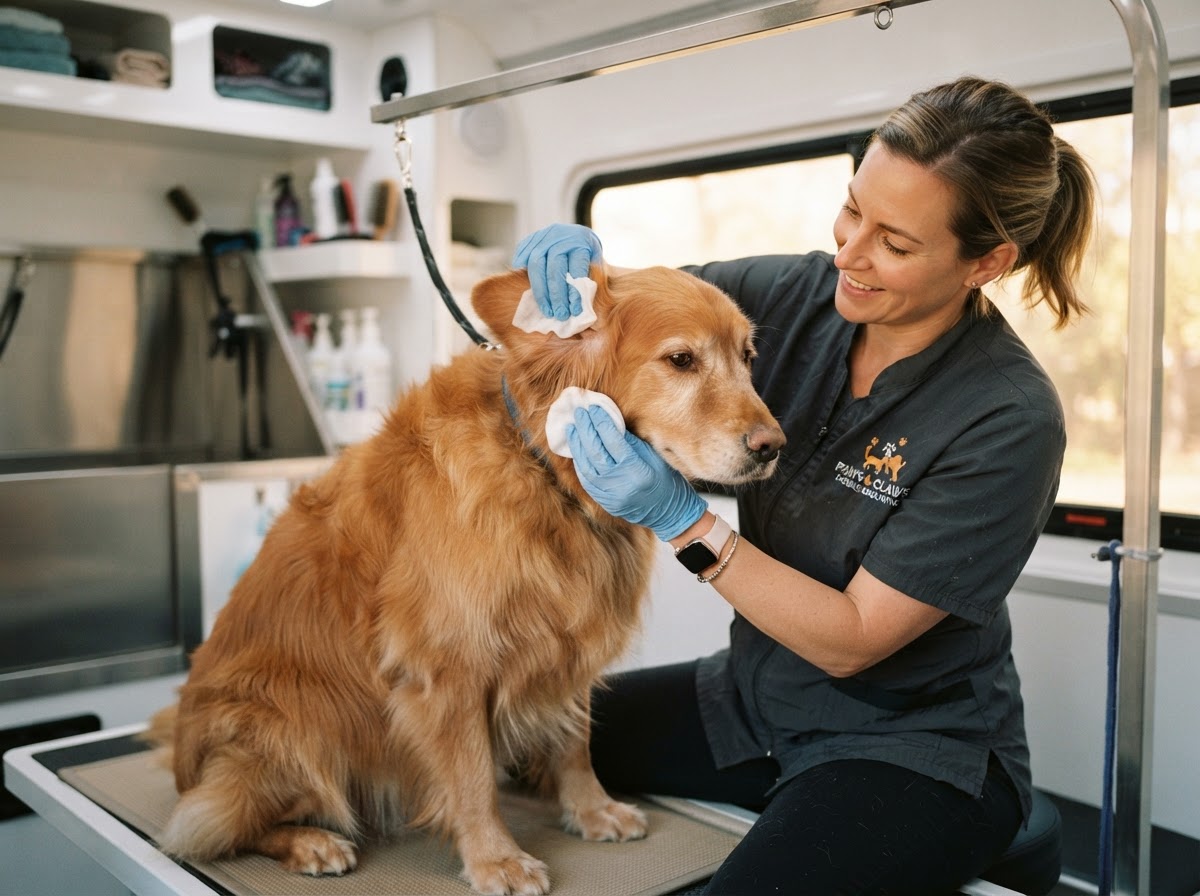
During a grooming appointment, ear cleaning is a gentle, exterior step. The groomer cleans the visible outer ear flap and the entrance of the ear canal to remove loose hair and everyday buildup. It is part of the Full Grooming service and helps keep the outer ear clean as part of regular grooming maintenance. It does not go deep into the canal, and it does not treat any condition.
This routine cleaning is valuable for general tidiness and for helping you stay familiar with the normal appearance of your pet's ears. When the outer ear is clean, it is easier to notice if something changes. But the moment a change suggests a problem, the appropriate response shifts from grooming to veterinary care.
Signs that go beyond grooming care
Certain signs indicate that an ear concern is beyond the scope of grooming and should be discussed with a veterinarian. These signs suggest a possible medical issue that a groomer cannot and should not attempt to treat. If you notice any of them, the right step is to contact your veterinarian rather than relying on grooming care.
Signs to discuss with a veterinarian
- Pain when the ear is touched, or the pet pulling away
- Unusual discharge, especially if it is discolored or thick
- A strong or persistent odor from the ear
- Redness or swelling of the ear flap or canal entrance
- Bleeding or open sores in or around the ear
- Persistent scratching or head shaking that does not stop
- A sudden change in the pet's behavior or balance
None of these signs can be diagnosed or treated during grooming. A groomer who notices them will advise a veterinary visit. The same applies if you notice them at home between appointments. Acting on these signs promptly is the best way to protect your pet's comfort and health.
When in doubt, ask a veterinarian
Pain, unusual discharge, strong odor, swelling, bleeding, or persistent irritation are signs that go beyond grooming. A groomer cannot diagnose or treat these, and the right step is veterinary care.
Why groomers do not diagnose or treat ear conditions
Groomers are trained in coat and exterior care, not in diagnosing or treating medical conditions. Ear infections and other ear problems require a veterinary examination, which may include looking deep into the canal with specialized tools and, if needed, prescribing medication. Attempting to treat an ear problem during grooming could delay proper care or cause discomfort.
This is why a responsible groomer stays within the scope of exterior cleaning and refers anything that looks medical to a veterinarian. It is not a limitation of the grooming service, it is the correct division of care. The same boundary applies to other grooming-adjacent areas, as the guide to teeth cleaning versus veterinary dental cleaning explains for oral care.
How the two work together
Routine ear cleaning and veterinary care complement each other when each is used for its purpose. Grooming keeps the visible outer ear clean and helps you notice changes early. Veterinary care addresses any medical concern that arises. Together, they support your pet's ear health without overlapping inappropriately.
A practical approach is to let grooming handle routine tidiness and to treat any of the warning signs above as a prompt to call your veterinarian. If you are unsure whether something is routine, it is always appropriate to ask your veterinarian. It is better to check than to assume a concern will resolve on its own.
What to tell the groomer
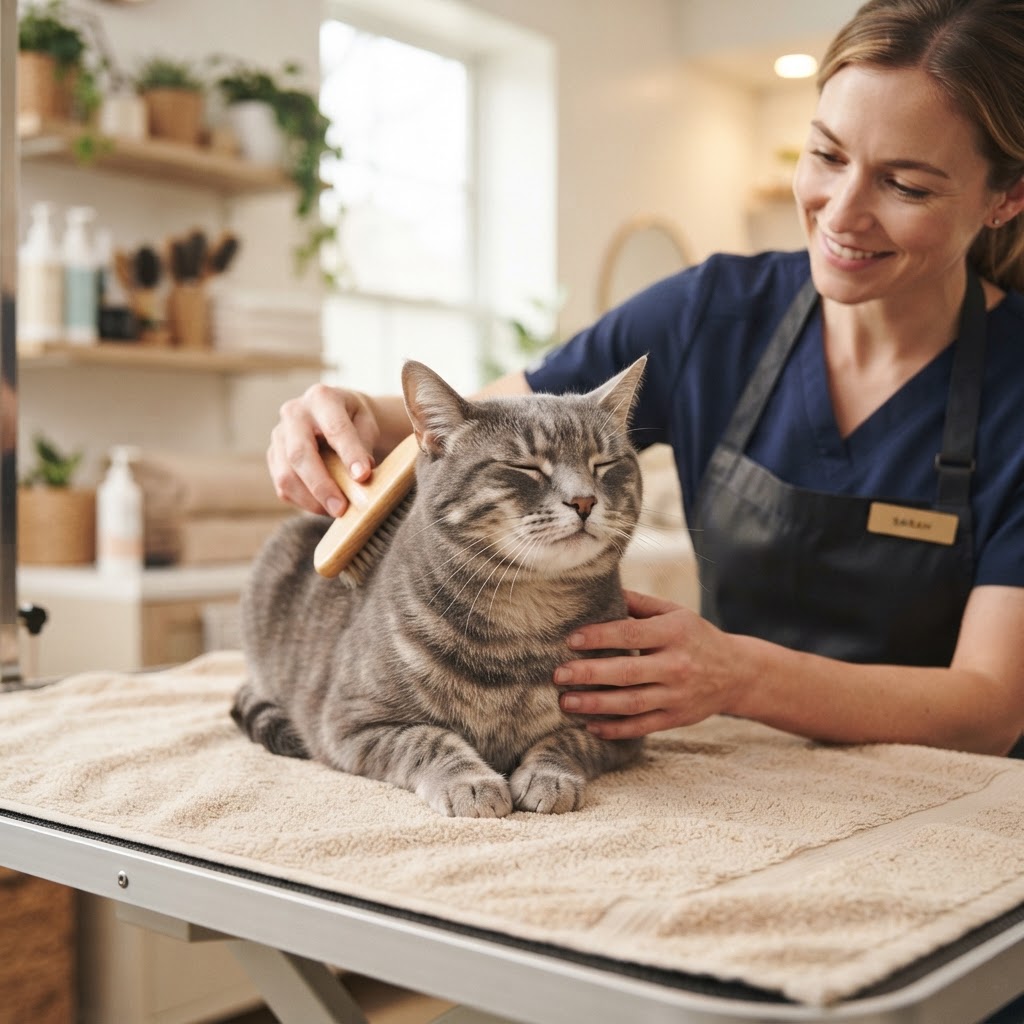
If your pet has a history of ear issues, has been treated by a veterinarian for an ear problem, or is sensitive about their ears being touched, share that with the groomer. This helps the groomer approach the ear cleaning step with appropriate care and avoid causing discomfort. The guide to what to tell your groomer about your pet's ears covers this in detail.
If your pet is currently being treated for an ear condition, follow your veterinarian's instructions and let the groomer know. In some cases, the groomer may adjust or skip the ear cleaning step based on your veterinarian's guidance. Keeping both your groomer and your veterinarian informed ensures your pet receives consistent, appropriate care.
Making the right call
The simplest way to think about the difference is this: if the ear looks and smells normal and the pet is comfortable, routine exterior cleaning during grooming is appropriate. If anything looks, smells, or feels off, or if the pet is in discomfort, contact your veterinarian. Grooming care and veterinary care each have their place, and using each correctly keeps your pet's ears healthier.
When you request a mobile grooming appointment, you can mention any ear observations so the groomer is informed. And if you notice any of the warning signs, reach out to your veterinarian first. That balance of routine grooming care and timely veterinary attention is the best way to care for your pet's ears over time.
This article provides general pet-grooming information. Appropriate grooming methods depend on the individual pet, coat condition, temperament, health, and requested service. Confirm service suitability and preparation instructions with Mufasa Pets Mobile Grooming. Contact a veterinarian regarding medical, dental, skin, ear, or behavioral health concerns.
Frequently Asked Questions
What is the difference between routine ear cleaning and veterinary care?+
Routine ear cleaning during grooming is a gentle exterior cleaning of the visible outer ear. Veterinary care diagnoses and treats medical conditions inside the ear. Grooming does not treat infections or diagnose ear problems.
What ear signs mean I should contact a veterinarian?+
Pain, unusual discharge, a strong or persistent odor, redness or swelling, bleeding, open sores, persistent scratching or head shaking, and sudden behavioral or balance changes all warrant a veterinary visit.
Can a groomer treat an ear infection?+
No. A groomer cannot diagnose or treat ear infections. Ear infections require a veterinary examination and, if needed, prescribed medication. A groomer who notices signs of a problem will advise a veterinary visit.
Will the groomer clean my pet's ears if they look healthy?+
Yes. If the ears look healthy, routine exterior cleaning proceeds as part of the grooming appointment to keep the visible outer ear tidy.
What if my pet is being treated for an ear condition?+
Follow your veterinarian's instructions and let the groomer know. The groomer may adjust or skip the ear cleaning step based on your veterinarian's guidance to keep your pet comfortable.
Should I tell the groomer about my pet's ear history?+
Yes. If your pet has a history of ear issues or is sensitive about their ears, sharing that helps the groomer approach the ear cleaning step with appropriate care.
How do I book a grooming appointment that includes ear cleaning?+
Request an appointment through the contact page or call (407) 800-3103. Your appointment is confirmed once the Mufasa team responds.
Request a Mobile Grooming Appointment
We come to your home throughout Central Florida.