A sanitary trim is a straightforward grooming step, but sharing the right information beforehand helps the groomer perform it safely and comfortably. If your pet has coat concerns, sensitivity, irritation, or behavioral considerations in the hygiene areas, those details matter. This guide explains what to share before requesting a sanitary trim and when veterinary evaluation may be more appropriate.
Being prepared helps the groomer work at your pet's pace and recognize when something is outside the scope of grooming. It pairs with the guide to what a sanitary trim includes and the guide comparing a sanitary trim to a full haircut.
Share coat condition in the hygiene areas
The condition of the coat in the hygiene areas affects how the groomer approaches the trim. If the hair is matted, tangled, or heavily soiled, the groomer needs to know so they can plan the best approach. Matted hair in the hygiene areas may need to be carefully clipped short rather than combed through, which is a practical decision based on the pet's comfort.
If the coat is in good condition and simply needs tidying, the trim will be straightforward. Sharing an honest description of the coat condition when you request a mobile grooming appointment helps the groomer prepare and set realistic expectations.
Mention any sensitivity
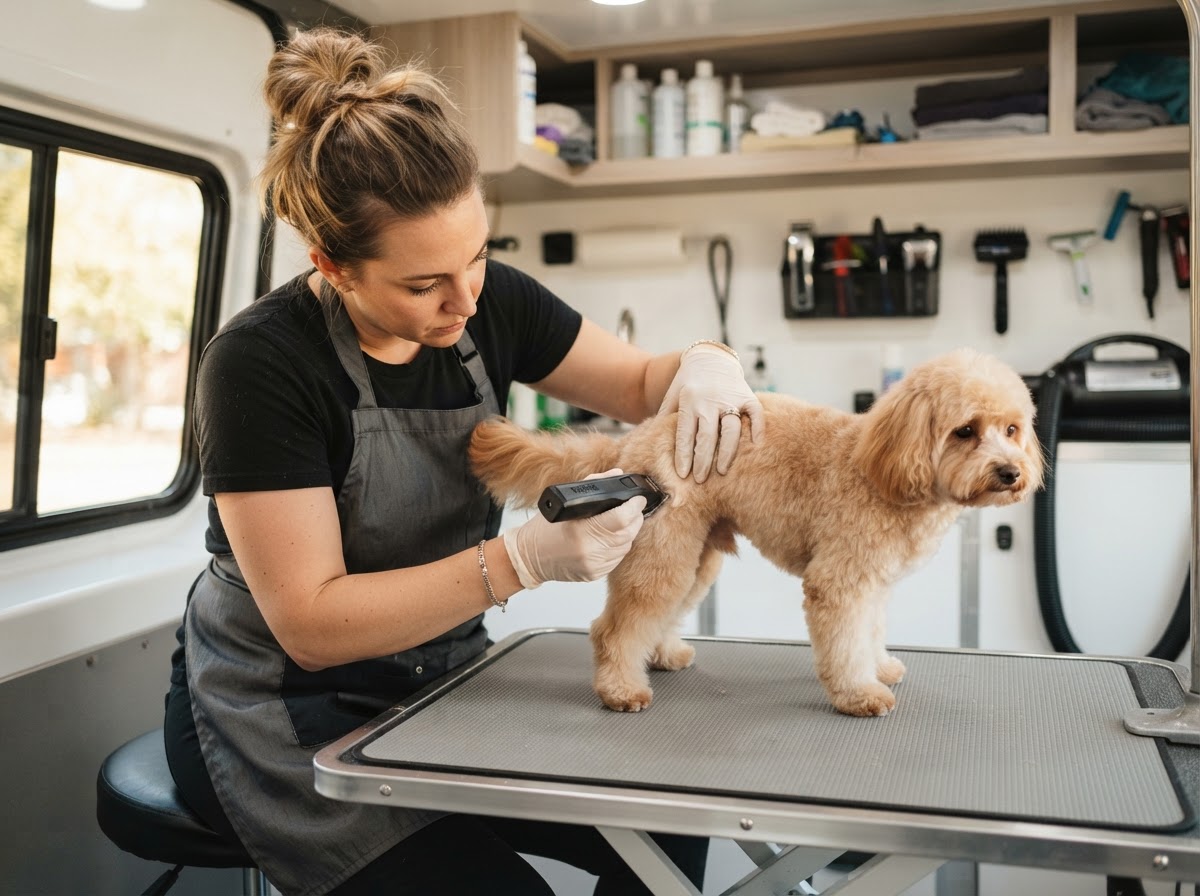
Some pets are sensitive about being handled in the hygiene areas. This is normal, and the groomer can adjust their approach to keep the pet comfortable. If your pet pulls away, becomes tense, or is protective of those areas when touched, let the groomer know beforehand.
The groomer will work gently and at the pet's pace. They may take breaks, use a calm approach, and adjust the technique to what works best for your pet. Sharing sensitivity information is not a problem to solve; it is information that helps the groomer provide better care.
Sensitivity is normal
Some pets are sensitive about being handled in the hygiene areas. This is normal. Tell the groomer so they can work gently, take breaks, and adjust the approach to keep your pet comfortable.
Report any irritation or skin concerns
If you have noticed any irritation, redness, rash, or sensitivity in the hygiene areas, report it before the appointment. These observations are important because they may indicate a skin condition that is outside the scope of grooming. The groomer can assess the area and advise whether a veterinary visit is appropriate before proceeding with the trim.
The groomer will not attempt to treat a skin condition. If the area looks irritated or inflamed, the groomer may recommend that you consult a veterinarian first and may adjust or skip the trim in that area to avoid causing discomfort. This is the right approach, and it keeps your pet's wellbeing first.
Signs that may warrant a veterinary visit
- Redness, rash, or inflammation in the hygiene areas
- Persistent itching, scratching, or licking of those areas
- Unusual discharge, swelling, or lumps
- Signs of pain when the area is touched
- Scooting or changes in bathroom habits
If you notice any of these signs, it is a good idea to consult a veterinarian before the grooming appointment. The groomer can still perform other grooming steps, but the irritated area may need veterinary attention first.
Share behavioral information
Behavioral information helps the groomer approach the sanitary trim in a way that keeps your pet calm. If your pet is anxious about grooming in general, sensitive about being handled in certain areas, or has had a difficult experience during grooming in the past, sharing that helps the groomer prepare.
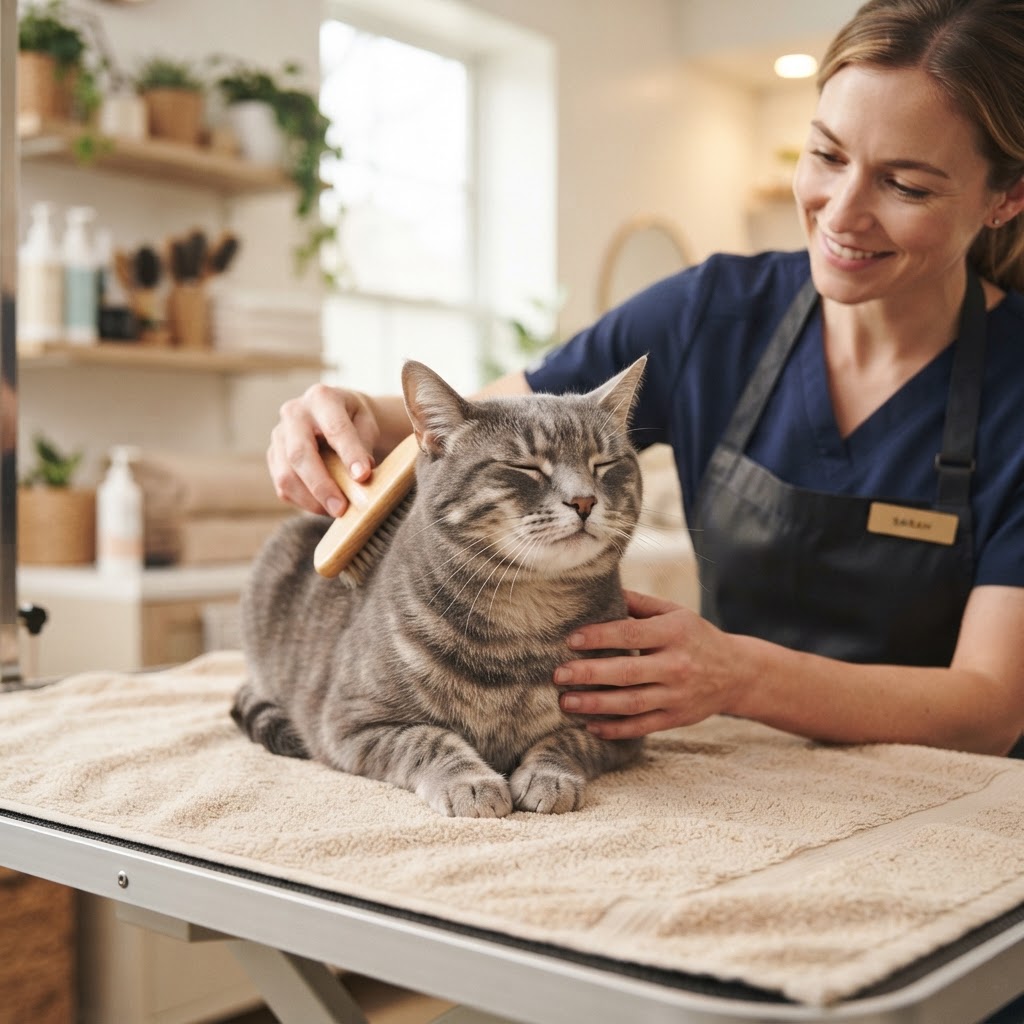
For cats, who may be less comfortable being handled in the hygiene areas than dogs, this information is especially valuable. The groomer can work at the cat's pace and adjust the approach to keep the appointment stress-free. The guide to preparing your cat for mobile grooming covers cat-specific preparation in more detail.
What to confirm before arrival
Before the groomer arrives, confirm a few practical details. Make sure the grooming can take place in a calm, accessible area at your home. If your pet needs to be in a specific room or area for the grooming, have that ready. For mobile grooming, the service takes place at your home, so there is no travel or drop-off involved.
Also confirm that you have shared all relevant information about your pet's coat, sensitivity, and health. If anything changes between the time you request the appointment and the day of the visit, let the groomer know when they arrive. Open communication helps ensure a smooth and comfortable appointment.
When veterinary guidance comes first
For most pets, a sanitary trim is a routine grooming step that proceeds without issues. But when there are signs of irritation, skin concerns, or pain in the hygiene areas, veterinary guidance should come first. The groomer cannot diagnose or treat skin conditions, and attempting to trim an irritated area could cause discomfort.
If you are unsure whether a concern is routine or medical, the safest approach is to consult a veterinarian. The groomer can then perform the sanitary trim once the area has been evaluated, and they can focus on the other grooming steps in the meantime. This partnership between grooming and veterinary care keeps your pet comfortable and healthy.
By sharing the right information before the appointment, you help the groomer provide the best care for your pet. Whether the sanitary trim is straightforward or requires adjustments, honest communication ensures your pet receives appropriate, comfortable attention. You can share all relevant details when you request a mobile grooming appointment.
This article provides general pet-grooming information. Appropriate grooming methods depend on the individual pet, coat condition, temperament, health, and requested service. Confirm service suitability and preparation instructions with Mufasa Pets Mobile Grooming. Contact a veterinarian regarding medical, dental, skin, ear, or behavioral health concerns.
Frequently Asked Questions
What should I tell the groomer before a sanitary trim?+
Share the coat condition in the hygiene areas, any sensitivity your pet has about being handled there, any irritation or skin concerns, and behavioral information that helps the groomer keep your pet calm.
What if the hair in the hygiene areas is matted?+
Tell the groomer. Matted hair in the hygiene areas may need to be carefully clipped short rather than combed through, which is a practical decision based on the pet's comfort.
My pet is sensitive about being handled in those areas. Is that a problem?+
No, it is normal. Tell the groomer so they can work gently, take breaks, and adjust the approach to keep your pet comfortable. Sensitivity information helps the groomer provide better care.
What if I notice irritation or redness in the hygiene areas?+
Report it before the appointment. Irritation, redness, rash, or sensitivity may indicate a skin condition outside the scope of grooming. The groomer may recommend a veterinary visit and may adjust or skip the trim in that area.
When should I consult a veterinarian before the trim?+
If you notice redness, rash, persistent itching, unusual discharge, swelling, lumps, pain, scooting, or changes in bathroom habits, consult a veterinarian first. The groomer can perform other grooming steps while the area is evaluated.
Is a sanitary trim different for cats?+
Cats may be less comfortable being handled in the hygiene areas than dogs. The groomer works at the cat's pace and adjusts the approach. Sharing behavioral information is especially valuable for cats.
How do I share this information before the appointment?+
Share all relevant details about your pet's coat, sensitivity, and health when you request a mobile grooming appointment. If anything changes before the visit, let the groomer know when they arrive.
Request a Mobile Grooming Appointment
We come to your home throughout Central Florida.