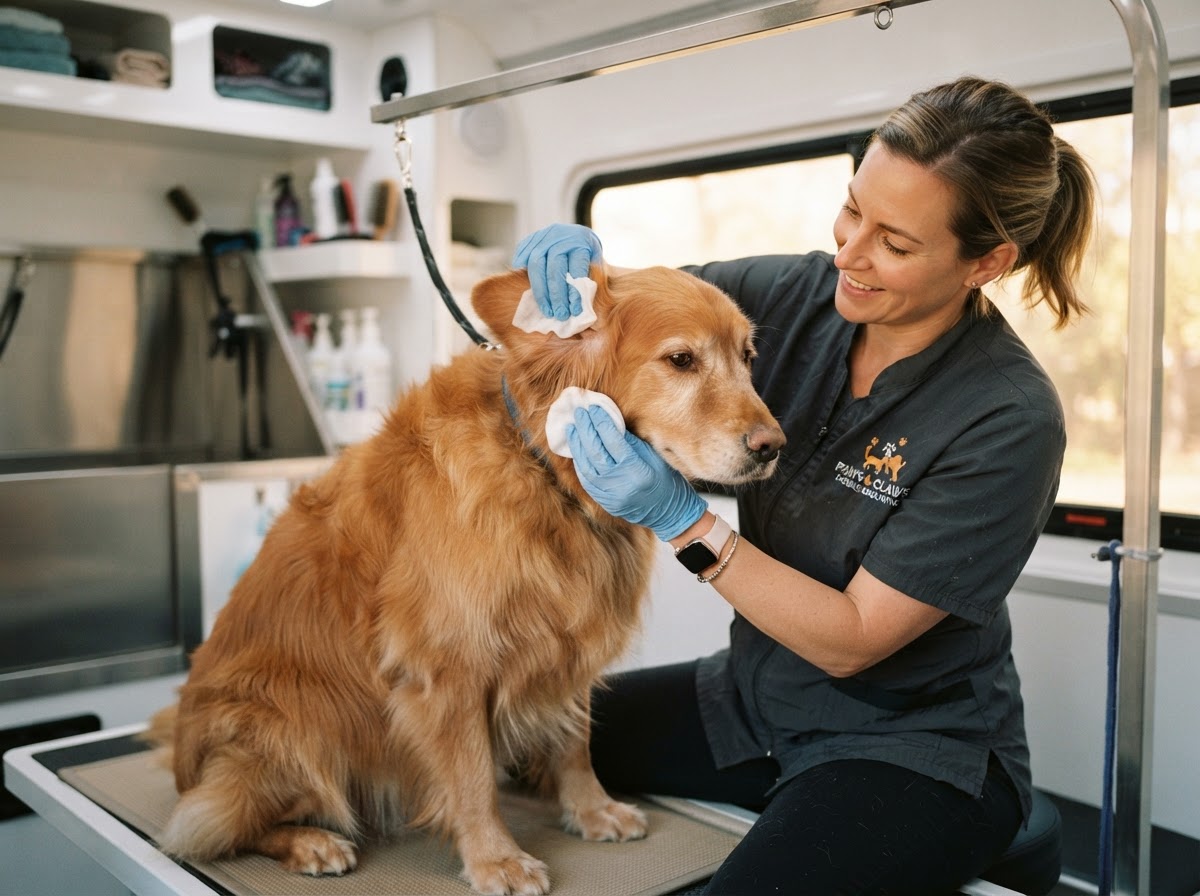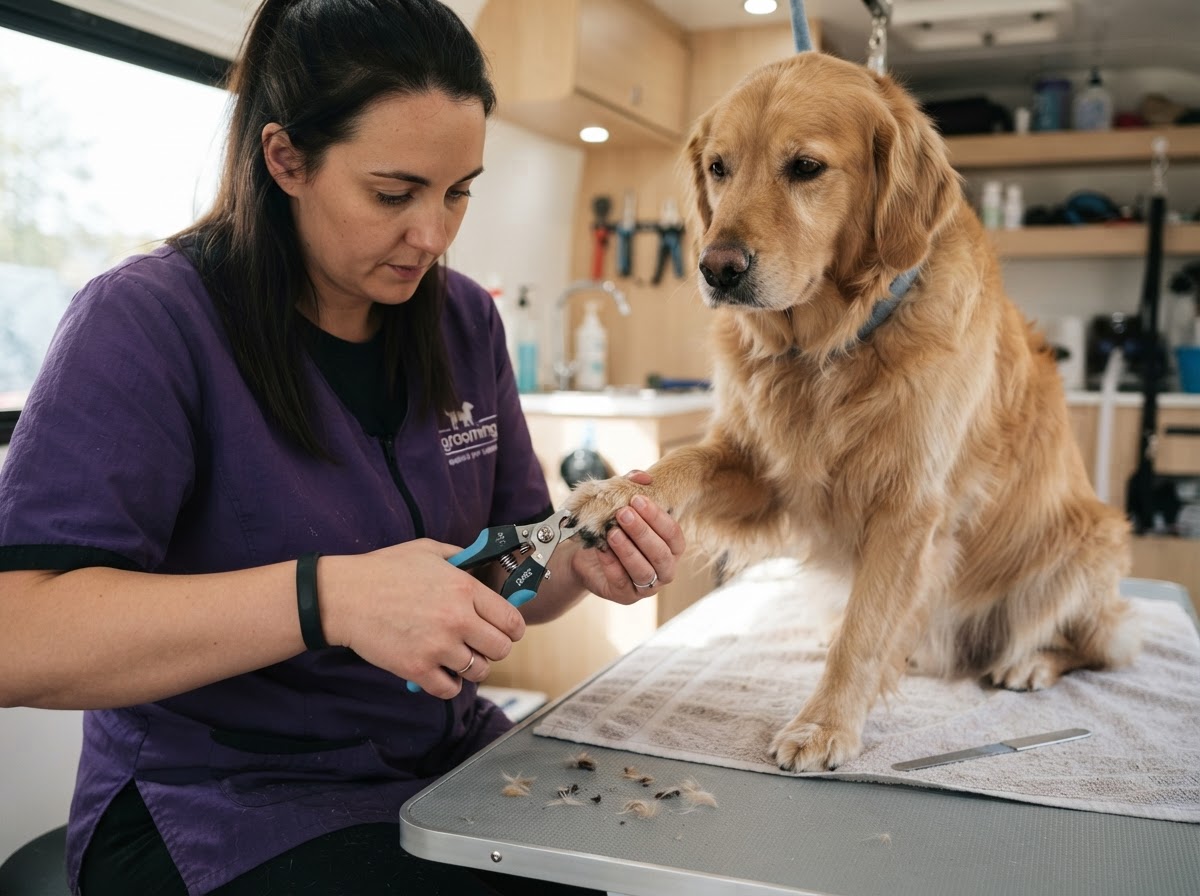
Some pets are sensitive about having their paws handled, and nail care can be the part of grooming they find most challenging. If your dog or cat pulls away, licks nervously, or becomes tense when their feet are touched, there are gentle ways to help them feel more comfortable. This guide explains how to prepare a sensitive pet for nail trimming and what to share with the groomer before the appointment.
The goal is never to force a pet through a stressful experience. It is to set the stage for a calmer appointment and to give the groomer the information they need to work at your pet's pace. It pairs with the guide to what nail trimming and filing includes and the guide to how often nails should be checked.
Why some pets are sensitive about nail care
Nail care involves handling the paws, which is an intimate and sensitive area for many pets. Some pets are naturally protective of their feet, and others may have had an uncomfortable experience in the past. For cats, having their paws held can feel particularly restrictive. Understanding that this sensitivity is normal helps you approach preparation with patience rather than frustration.
It is also worth noting that sensitivity is not a behavior problem. A pet that dislikes nail care is not being difficult; they are communicating that they feel uncomfortable. Responding to that communication with patience helps build trust over time.
Gentle preparation at home
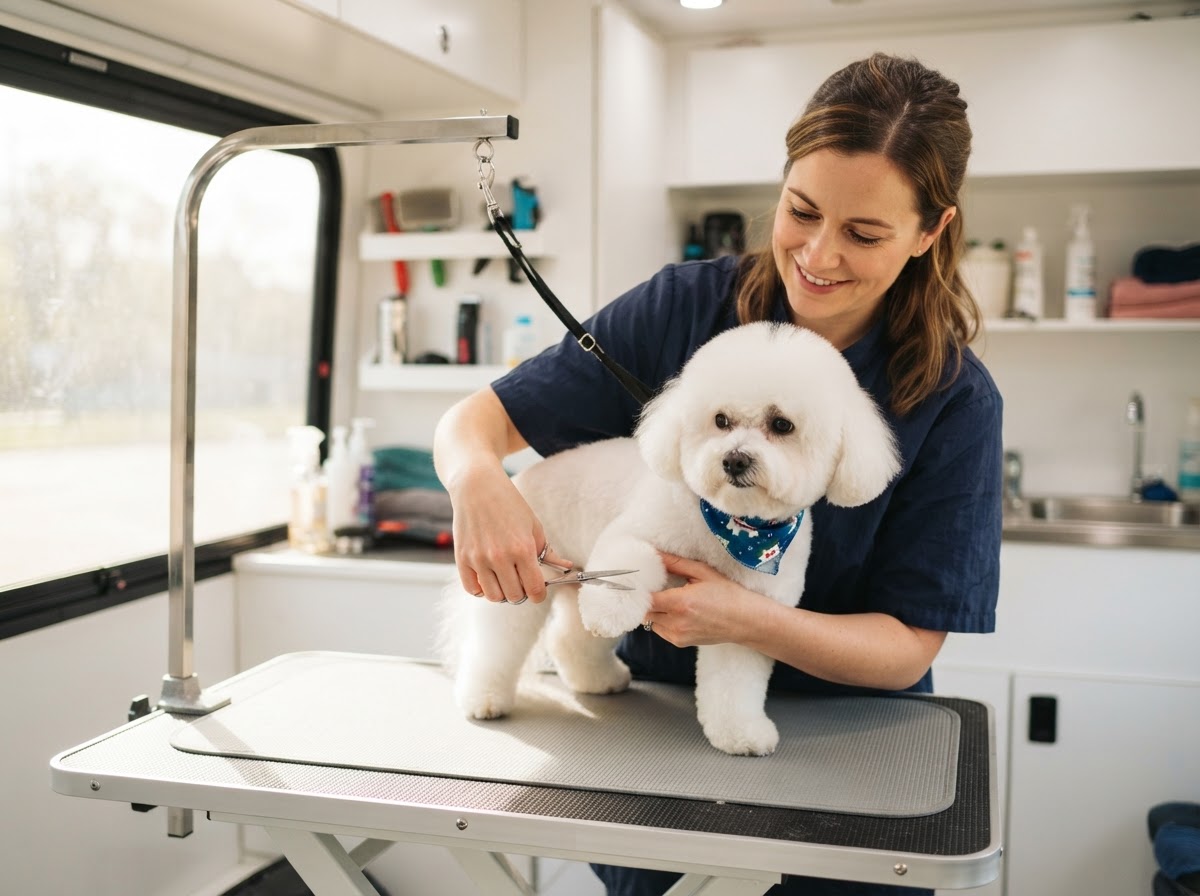
You can help your pet feel more comfortable with paw handling through short, positive sessions at home. The goal is not to trim the nails yourself, but to help your pet associate having their paws touched with calm and positive experiences.
Touch and treat
Gently touch your pet's paws for a few seconds, then offer a small treat or praise. Keep the sessions short, just a minute or two, and end on a positive note. Over time, gradually increase how long you hold the paw and how close you get to the toes and nails. The goal is slow, comfortable progress, not a rush.
Let the pet set the pace
If your pet pulls away, let them. Do not hold on or force the contact. Pulling away is a clear signal, and respecting it builds trust. You can try again later or the next day. Consistency and patience matter more than the length of any single session.
Never force it
If your pet pulls away, let them go. Forcing paw handling breaks trust and makes future nail care harder. Short, positive sessions that end on a good note are more effective than long, stressful ones.
What to tell the groomer
Sharing information about your pet's sensitivity before the appointment helps the groomer prepare and adjust their approach. The more the groomer knows, the better they can work at your pet's pace and keep the appointment comfortable.
- Whether your pet is sensitive about paw handling in general
- Any past reactions during nail care, such as pulling away or vocalizing
- Which paws or toes your pet is most protective of
- Whether certain approaches, like grinding versus clipping, have worked better
- Any medical concerns with the paws or nails
You can share this information when you request a mobile grooming appointment. The team can note it for the groomer so they are prepared before they begin.
How the groomer approaches a sensitive pet
During the appointment, the groomer will work at your pet's pace. They may start by gently handling the paws to gauge your pet's comfort before beginning the trim. If your pet is tense, the groomer can take breaks, use a calm and steady approach, and adjust the technique to what works best for your pet.
The groomer's goal is to complete the nail care safely and comfortably. If your pet is too stressed to continue, the groomer may stop and advise a different approach for the next visit rather than pushing through. This is a judgment call based on your pet's wellbeing, and it is the right call. The Full Grooming service includes nail trimming and filing, but the groomer will always prioritize your pet's comfort.
When veterinary guidance may help
For most sensitive pets, patience and gentle preparation are enough. But if your pet's sensitivity is severe, if they show signs of pain when their paws are touched, or if the sensitivity is new and sudden, it is worth discussing with a veterinarian. Sometimes paw sensitivity has a medical cause, and a veterinarian can help determine whether that is the case.
A veterinarian can also advise on whether anxiety-reduction strategies or, in specific cases, medication might be appropriate for a pet that finds grooming very difficult. These are veterinary decisions, not grooming decisions, and the groomer can help you recognize when a veterinary conversation would be helpful.
Building comfort over time
Helping a sensitive pet become more comfortable with nail care is often a gradual process. Consistent, gentle handling at home, honest communication with the groomer, and a patient approach during appointments all contribute to progress over time. Some pets become comfortable quickly, while others need more time, and both are okay.
The goal is not perfection but progress. Each calm experience helps your pet build a more positive association with nail care, making future appointments easier. By working together with the groomer and approaching preparation with patience, you can help your pet have a more comfortable grooming experience.
This article provides general pet-grooming information. Appropriate grooming methods depend on the individual pet, coat condition, temperament, health, and requested service. Confirm service suitability and preparation instructions with Mufasa Pets Mobile Grooming. Contact a veterinarian regarding medical, dental, skin, ear, or behavioral health concerns.
Frequently Asked Questions
My pet hates having their nails done. What should I do?+
Try short, positive paw-handling sessions at home where you touch the paws briefly and offer a treat. Share your pet's sensitivity with the groomer before the appointment so they can work at your pet's pace.
Should I force my pet to hold still for nail trimming?+
No. Forcing paw handling breaks trust and makes future nail care harder. If your pet pulls away, let them go and try again later. Patience is more effective than force.
What should I tell the groomer about my pet's nail sensitivity?+
Share whether your pet is sensitive about paw handling, any past reactions, which paws they are most protective of, whether certain approaches have worked better, and any medical concerns with the paws or nails.
Will the groomer force my pet through the nail trim?+
No. The groomer works at your pet's pace and may take breaks or adjust the technique. If your pet is too stressed, the groomer may stop and advise a different approach for the next visit rather than pushing through.
Is nail sensitivity a behavior problem?+
No. A pet that dislikes nail care is communicating that they feel uncomfortable, not being difficult. Responding with patience helps build trust over time.
When should I talk to a veterinarian about nail sensitivity?+
If the sensitivity is severe, if your pet shows signs of pain when their paws are touched, or if the sensitivity is new and sudden, discuss it with a veterinarian. Sometimes paw sensitivity has a medical cause.
Can I trim my pet's nails at home to help them get used to it?+
You can do gentle paw-handling sessions at home to build comfort, but nail trimming itself is best left to the groomer unless your veterinarian has shown you a safe technique. The goal of home sessions is positive association, not trimming.
Request a Mobile Grooming Appointment
We come to your home throughout Central Florida.