There is no single schedule that works for every pet, because nail maintenance frequency depends on several factors. The right routine for your dog or cat depends on how active they are, the surfaces they walk on, and how quickly their nails grow. This guide explains those factors so you can develop a sensible approach to checking your pet's nails.
Understanding what affects nail growth helps you recognize when it is time for a trim. It pairs with the guide to what nail trimming and filing includes, which covers the service itself, and the guide to preparing a sensitive pet for nail care, which covers preparation.
Factors that affect nail maintenance frequency
Several factors influence how quickly your pet's nails grow and how often they need attention. Understanding these factors helps you develop a routine that fits your pet rather than following a generic schedule.
Activity level
Pets that walk and run on hard surfaces like concrete or asphalt naturally wear their nails down more quickly. A dog that walks on pavement daily may need less frequent trimming than a dog that mostly walks on grass or soft trails. Cats that are primarily indoors also tend to need regular nail attention, since their nails do not wear down as naturally.
Walking surfaces
The surfaces your pet walks on play a significant role. Hard, rough surfaces help file the nails naturally, while soft surfaces like grass, carpet, and sand do not. If your pet spends most of their time on soft surfaces, their nails will likely need more frequent trimming.

Natural growth rate
Just as people's hair and nails grow at different rates, pets' nails grow at different speeds. Some pets simply have faster-growing nails than others. Breed, age, and individual biology all play a role. Older pets may be less active, which means their nails wear down less and may need more frequent attention.
Signs it may be time for a trim
Rather than following a strict calendar, it often works better to watch for signs that your pet's nails need attention. These signs can help you recognize when it is time to schedule a grooming appointment or check the nails between visits.
- You can hear the nails clicking on hard floors when your pet walks
- The nails appear to curve downward or sideways
- The nails snag on carpet, blankets, or fabric
- Your pet's gait seems different or they favor a paw
- The dewclaws, if present, are growing long
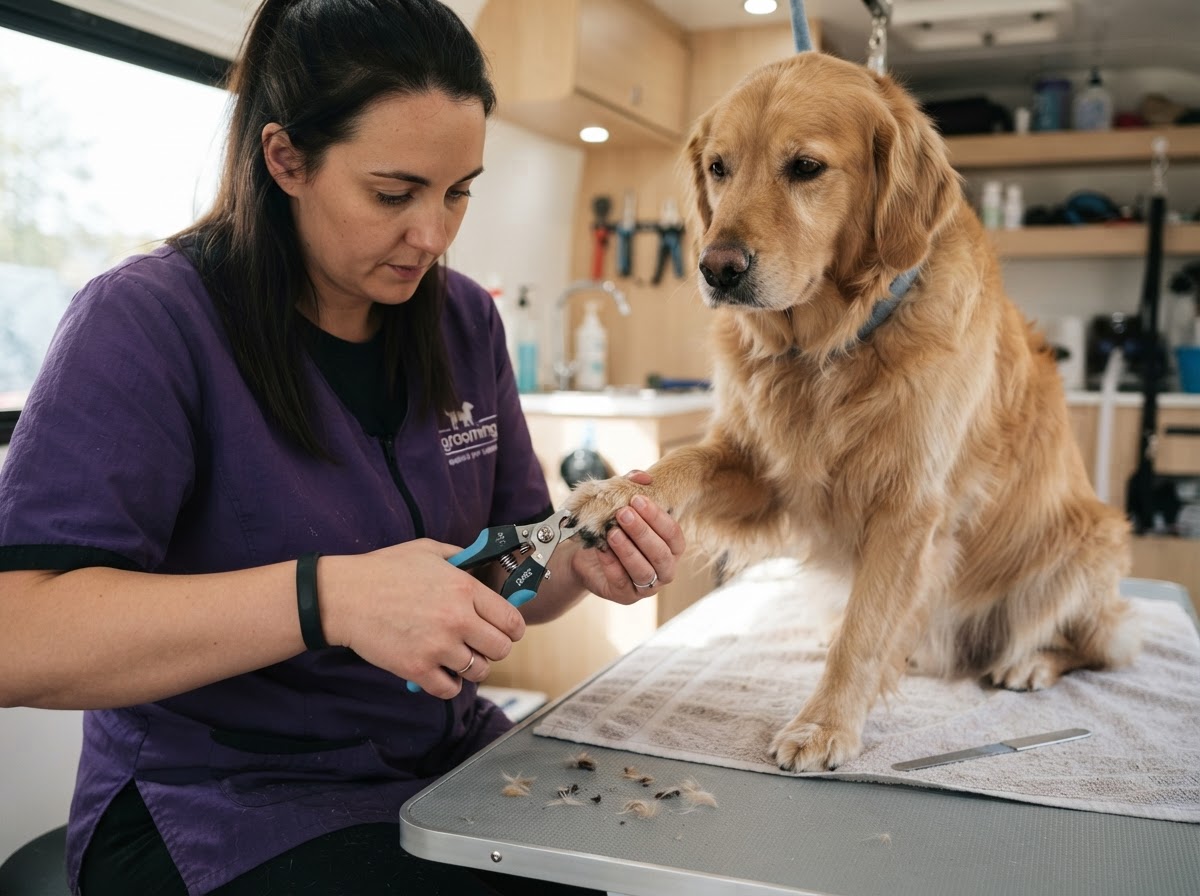
If you notice any of these signs, it is a good time to request a mobile grooming appointment that includes nail trimming and filing. The groomer can assess the nails and bring them to a comfortable length.
Why regular checks matter
Regular nail checks help you stay ahead of discomfort. Overlong nails can affect how your pet walks and stands, and they can snag on surfaces, which risks tearing the nail. Catching nail growth before it becomes a problem is easier and more comfortable for your pet than waiting until the nails are very long.
Regular checks also help you notice changes. If a nail grows differently, appears discolored, or seems sensitive, those are observations worth sharing with the groomer or, if they seem medical, with a veterinarian. The Full Grooming service includes nail trimming and filing as part of a complete grooming appointment.
Watch for signs, not just dates
Instead of a strict schedule, watch for signs like clicking on floors, curving nails, or snagging on fabric. These signs tell you it is time for a trim, regardless of how long it has been.
Dewclaws deserve special attention
Dewclaws, when present, deserve particular attention because they often do not touch the ground and therefore do not wear down naturally. This means they can grow long enough to curve back into the paw pad if left unchecked. If your pet has dewclaws, make sure they are included in every nail trimming service.
The groomer will check for dewclaws during the nail care step and trim them if they are present. Mentioning that your pet has dewclaws when you request an appointment helps ensure they are not overlooked.
Developing a sensible routine
A practical approach is to check your pet's nails every few weeks and watch for the signs described above. If the nails seem long or you notice clicking or snagging, schedule a grooming appointment. If you are unsure, the groomer can assess the nails during your next grooming visit and advise you on a suitable interval.
Because nail care is included in the Full Grooming service, pets that groom regularly receive nail maintenance as part of their routine. If your pet needs nail care between full grooming appointments, you can request a mobile grooming appointment and mention that nail care is the priority.
When to consult a veterinarian
Most nail maintenance is a routine grooming matter, but some situations call for veterinary attention. If a nail is cracked, split, bleeding, or appears infected, or if your pet shows signs of pain when walking or when a paw is touched, those go beyond routine grooming and should be discussed with a veterinarian.
The groomer can help you recognize when a nail concern is outside the scope of grooming care. If the groomer notices something during the nail care step, they will let you know and advise a veterinary visit. This partnership between grooming and veterinary care helps keep your pet comfortable and healthy.
This article provides general pet-grooming information. Appropriate grooming methods depend on the individual pet, coat condition, temperament, health, and requested service. Confirm service suitability and preparation instructions with Mufasa Pets Mobile Grooming. Contact a veterinarian regarding medical, dental, skin, ear, or behavioral health concerns.
Frequently Asked Questions
How often should my pet's nails be checked?+
There is no single schedule. Check every few weeks and watch for signs like clicking on floors, curving nails, or snagging on fabric. Activity level, walking surfaces, and growth rate all affect frequency.
Do dogs that walk on pavement need less frequent trimming?+
Often, yes. Hard surfaces like concrete and asphalt help wear nails down naturally. Dogs that mostly walk on grass or soft surfaces typically need more frequent trimming.
What signs tell me it is time for a nail trim?+
Clicking on hard floors, nails curving downward or sideways, snagging on carpet or fabric, changes in gait, or long dewclaws are all signs it is time for a trim.
Why do dewclaws need special attention?+
Dewclaws often do not touch the ground, so they do not wear down naturally. They can grow long enough to curve back into the paw pad if left unchecked, so they should be trimmed regularly.
Is nail trimming included in Full Grooming?+
Yes. Nail trimming and filing is one of the confirmed inclusions in the Full Grooming service, so pets that groom regularly receive nail maintenance as part of their routine.
What if I notice a cracked or bleeding nail?+
A cracked, split, bleeding, or infected nail, or signs of pain when walking, go beyond routine grooming. Contact a veterinarian for those concerns rather than waiting for a grooming appointment.
Can I request nail care between full grooming appointments?+
Yes. You can request a mobile grooming appointment and mention that nail care is the priority. The groomer can assess the nails and bring them to a comfortable length.
Request a Mobile Grooming Appointment
We come to your home throughout Central Florida.