Discussing your pet's oral-care needs before a grooming appointment helps the groomer approach the teeth cleaning step safely and comfortably. Dental history, mouth sensitivities, and any current concerns all shape how the step should be handled. This guide covers what to share with the groomer about your pet's oral care and when a concern points to veterinary guidance instead.
Good information protects your pet's comfort and keeps the teeth cleaning step within its proper scope. It pairs with the guide to what teeth cleaning includes and the guide to tooth brushing versus veterinary dental cleaning, which explain the service and its limits.
Dental history worth sharing
If your pet has a history of dental issues, let the groomer know. This includes past dental cleanings by a veterinarian, extractions, broken teeth, or recurring tartar. Even if the issue is currently resolved, the history helps the groomer understand the context and approach the teeth cleaning step with appropriate care.
If your pet is currently being treated for a dental condition, share that too, along with your veterinarian's instructions. In some cases, the groomer may adjust or skip the teeth cleaning step based on that guidance. The goal is to support your veterinarian's treatment plan rather than interfere with it, and keeping the groomer informed ensures your pet receives consistent care.
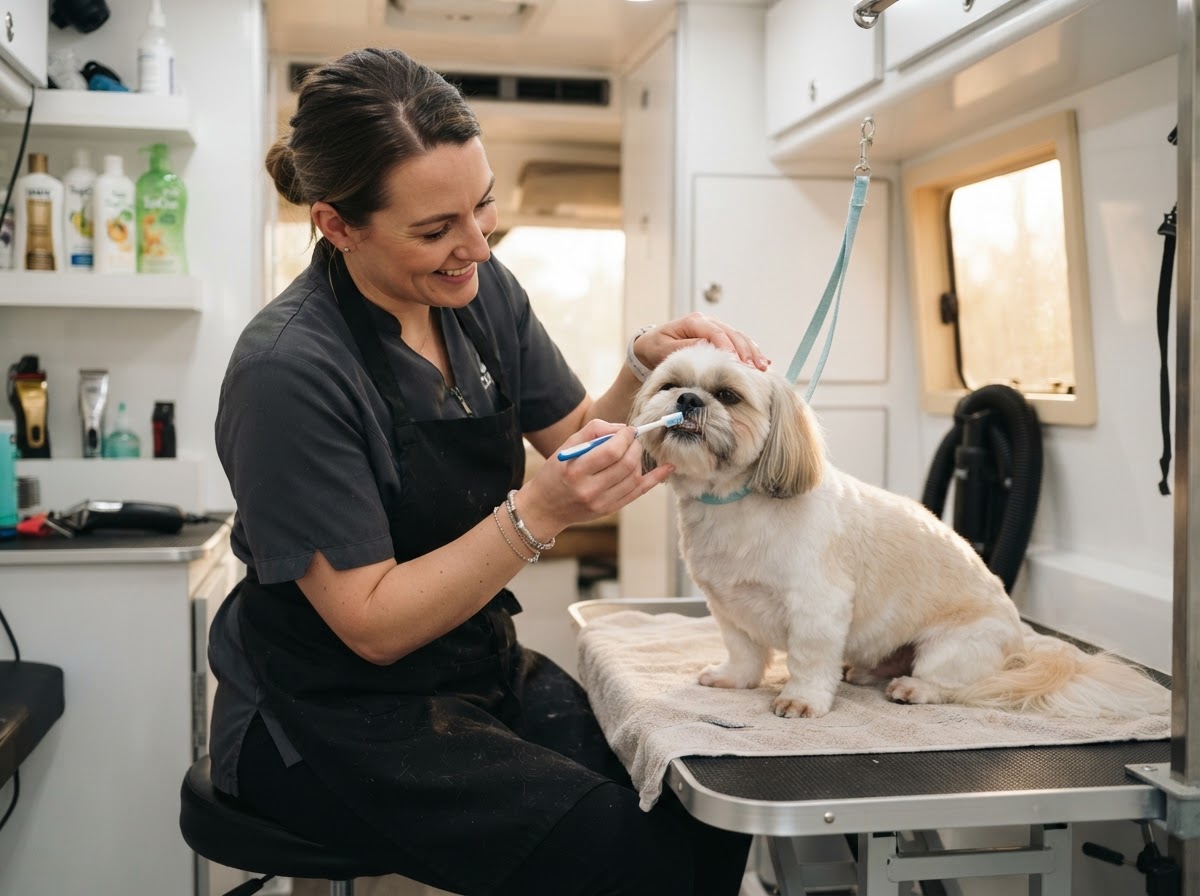
Dental history to mention
- Past veterinary dental cleanings or extractions
- Broken or previously damaged teeth
- Recurring tartar buildup
- Conditions currently being treated by a veterinarian
- Veterinarian instructions regarding oral care
Mouth sensitivities and handling tolerance
Many pets are sensitive about having their mouth handled. Some pull away when the lips are lifted, others dislike having their teeth touched, and some react more strongly. Telling the groomer about these sensitivities allows them to adjust their approach, work more slowly, or skip the step if your pet is not comfortable.
Handling tolerance is closely related. If your pet does well with calm, gentle handling but becomes anxious with quick movements, or if they need frequent breaks, share that with the groomer. These details help the groomer build trust during the appointment, which makes the teeth cleaning step, and the rest of the groom, easier for everyone. The guide to what to tell a mobile groomer covers handling information more broadly.
Current concerns and visible changes
If you have noticed any current concerns with your pet's mouth, mention them to the groomer. This includes bad breath, visible tartar, red or swollen gums, broken teeth, or changes in how your pet is eating. These observations help the groomer decide whether basic tooth brushing is appropriate or whether the mouth needs veterinary attention first.
It is important to remember that a groomer cannot diagnose these concerns. But sharing what you have observed gives the groomer context, and if the signs suggest a dental issue, the groomer will advise a veterinary visit. The guide to tooth brushing versus veterinary dental cleaning explains which signs go beyond grooming care. Your observations and the groomer's assessment together help your pet get the right care.
Signs to discuss with a veterinarian
Persistent bad breath, tartar, red or swollen gums, broken teeth, difficulty eating, or mouth pain are signs that go beyond grooming. Share them with the groomer, and contact your veterinarian for evaluation.
When veterinary guidance is needed
Some oral-care concerns are clearly outside the scope of grooming and require veterinary guidance. If your pet has significant tartar, gum disease, broken teeth, or mouth pain, the right step is to consult a veterinarian rather than rely on grooming care. A groomer cannot treat these conditions, and attempting to do so could delay proper treatment.
If you are unsure whether a concern is routine or medical, it is always appropriate to ask your veterinarian. Veterinarians can assess your pet's mouth thoroughly, including areas a groomer cannot see, and recommend the right care. When in doubt, a quick call to your veterinarian is the safest choice for your pet's oral health.
What the groomer can and cannot do
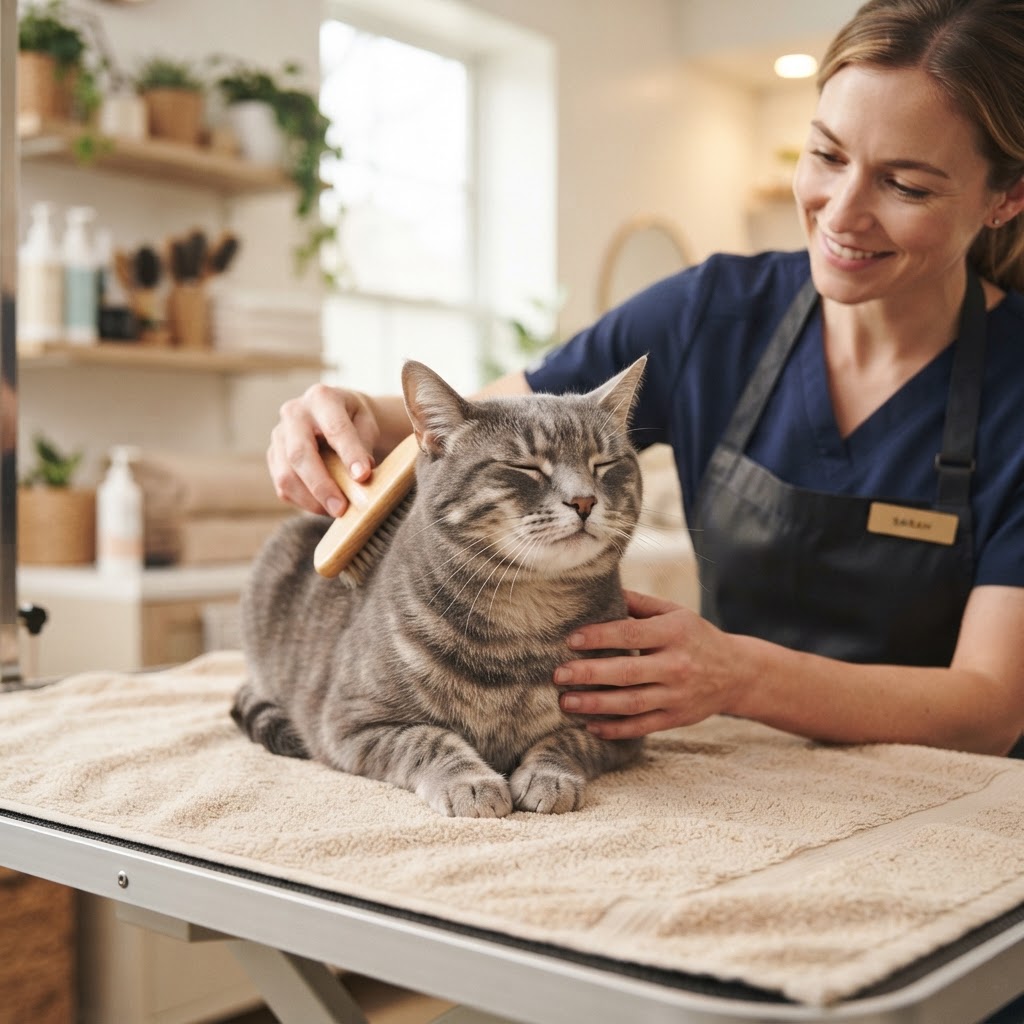
The groomer can perform basic tooth brushing or surface cleaning of the visible teeth as part of the grooming appointment, as explained in the guide to teeth cleaning during grooming. This step freshens the mouth and contributes to the overall clean result. It is gentle, quick, and adjusted to your pet's comfort.
The groomer cannot perform veterinary dental procedures, diagnose dental disease, or treat any dental condition. Those require a veterinarian. Knowing this boundary helps you use the grooming step appropriately and seek veterinary care when a concern goes beyond what grooming can address.
Putting it together before the appointment
Before the appointment, take a moment to note the key oral-care details: any dental history, mouth sensitivities or handling preferences, current concerns or visible changes, and any veterinarian instructions. You do not need to be exhaustive; a few honest observations give the groomer a clear picture.
When you request a mobile grooming appointment, you can mention that you have oral-care information to share, and the team can note it for the groomer. During the appointment, the groomer will also assess your pet's mouth directly. Your input and their assessment together lead to the right approach, keeping teeth cleaning safe, comfortable, and within its proper scope.
Discussing your pet's oral-care needs is a small effort that protects their comfort and supports good care. By sharing dental history, sensitivities, current concerns, and veterinarian instructions, you help the groomer care for your pet's mouth in the way that best suits their individual needs, and you help recognize when veterinary guidance is the right next step.
This article provides general pet-grooming information. Appropriate grooming methods depend on the individual pet, coat condition, temperament, health, and requested service. Confirm service suitability and preparation instructions with Mufasa Pets Mobile Grooming. Contact a veterinarian regarding medical, dental, skin, ear, or behavioral health concerns.
Frequently Asked Questions
What should I tell the groomer about my pet's oral care?+
Share any dental history, mouth sensitivities or handling preferences, current concerns or visible changes, and any veterinarian instructions. A few honest observations are enough.
Should I mention my pet's dental history?+
Yes. Past veterinary dental cleanings, extractions, broken teeth, recurring tartar, and current treatment all help the groomer approach the teeth cleaning step with appropriate care.
What if my pet is sensitive about having their mouth handled?+
Tell the groomer. They can adjust their approach, work more slowly, or skip the teeth cleaning step if your pet is not comfortable, to keep the appointment stress-free.
Should I mention current concerns like bad breath or tartar?+
Yes. Bad breath, tartar, red or swollen gums, broken teeth, or eating changes are worth mentioning. The groomer cannot diagnose them, but the information helps them decide whether a veterinary visit is needed.
When should I contact a veterinarian about my pet's oral care?+
Significant tartar, gum disease, broken teeth, mouth pain, or difficulty eating require veterinary care. If you are unsure whether a concern is routine or medical, ask your veterinarian.
Can the groomer treat dental disease?+
No. A groomer cannot diagnose or treat dental disease. The groomer performs basic tooth brushing only and refers any dental concern to a veterinarian.
How do I share oral-care information before the appointment?+
When you request an appointment, mention that you have oral-care information to share. The team can note it for the groomer, and the groomer will also assess your pet's mouth during the visit.
Request a Mobile Grooming Appointment
We come to your home throughout Central Florida.